
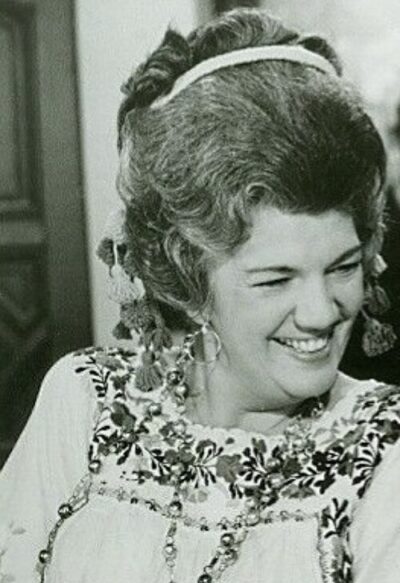
Carmen Zapata
Carmen Zapata was an American actress. Born July 15, 1927, in New York City. Died January 5, 2014, in Van Nuys. Awards include star on Hollywood Walk of Fame and Jane Fonda Humanitarian Award.
Facts
13 facts · 2 confirmed by two sources · 1 cited · 10 from one source
Where this comes from
Papalocal keeps its own record. It started from these sources; what each one said is kept here as it was copied, so a change on their side never changes this page by itself. Tap one to read its version.
What Wikidata says · copied November 16, 2026 · revision 2560476771
- Described as
- American actress (1927-2014)
- Other names
- Carmen Margarita Zapata
- Born
- July 15, 1927 · 3 references
- Died
- January 5, 2014 · 3 references
- Born in
- New York City
- Died in
- Van Nuys
- Cause of death
- heart failure
- Citizen of
- United States
- Occupation
- actor; singer; television actor; film actor · 1 reference
- Instrument
- voice
- Awards
- star on Hollywood Walk of Fame · 1 reference; Jane Fonda Humanitarian Award (1983) · 1 reference
- Wikipedias with a page
- 22
Wikidata item Q2939645 (wikidata.org/wiki/Q2939645), public domain (CC0). Copied November 16, 2026.
What Wikipedia says · copied November 16, 2026 · revision 1376771322
Carmen Margarita Zapata (July 15, 1927 – January 5, 2014) often referred to as "The First Lady of the Hispanic Theater" was an American actress best known for her role in the PBS bilingual children's program Villa Alegre. Zapata was also the co-founder and director of the Bilingual Foundation of the Arts in Los Angeles. Zapata took an active part in the Chicano movement of the 1960s and 1970s.
- Born, in its opening lines
- July 15, 1927
- Died, in its opening lines
- January 5, 2014
From the Wikipedia article “Carmen Zapata” (en.wikipedia.org/wiki/Carmen_Zapata), by its contributors, under CC BY-SA 4.0 (creativecommons.org/licenses/by-sa/4.0/). Copied November 16, 2026; not changed.
Confirmed Two sources agree. Cited One source, and it names where it got it. One source One source, without a reference of its own. Sources disagree The sources disagree. We show the best-supported value and keep theirs below.
