
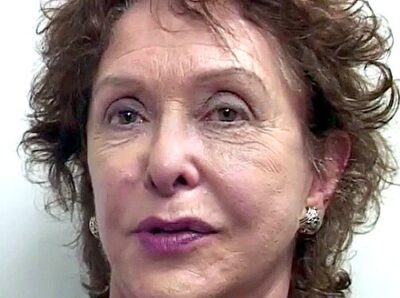
Carolee Schneemann
Carolee Schneemann was an American visual experimental artist. Born October 12, 1939, in Fox Chase. Died March 6, 2019, in New Paltz. Educated at University of Illinois System and Bard College. Awards include Guggenheim Fellowship, Courage Award for the Arts and Anonymous Was A Woman Award.
Facts
31 facts · 2 confirmed by two sources · 14 cited · 15 from one source
Where this comes from
Papalocal keeps its own record. It started from these sources; what each one said is kept here as it was copied, so a change on their side never changes this page by itself. Tap one to read its version.
What Wikidata says · copied November 16, 2026 · revision 2550951600
- Described as
- American visual experimental artist (1939–2019)
- Other names
- Carol Lee Schneemann
- Born
- October 12, 1939 · 8 references
- Died
- March 6, 2019 · 4 references
- Born in
- Fox Chase · 2 references
- Died in
- New Paltz · 2 references
- Cause of death
- breast cancer
- Citizen of
- United States · 3 references
- Occupation
- performance artist · 2 references; choreographer; painter · 3 references; university teacher; graphic artist · 1 reference; photographer · 3 references; installation artist · 2 references; video artist · 2 references
- Worked for
- Rutgers University; Hunter College; California Institute of the Arts · 1 reference
- Education
- University of Illinois System; Bard College; Oak Lane Day School · 1 reference; University of Illinois College of Fine and Applied Arts
- Genre
- happening · 1 reference; performance art · 1 reference; body art · 1 reference
- Awards
- Guggenheim Fellowship (1993) · 1 reference; Courage Award for the Arts (2012); Anonymous Was A Woman Award (2005) · 1 reference; Women's Caucus for Art Lifetime Achievement Award (2011)
- Field
- visual arts · 1 reference
- Spouse
- James Tenney
- Website
- http://www.caroleeschneemann.com/
- Wikipedias with a page
- 22
Wikidata item Q299662 (wikidata.org/wiki/Q299662), public domain (CC0). Copied November 16, 2026.
What Wikipedia says · copied November 16, 2026 · revision 1384534250
Carolee Schneemann (October 12, 1939 – March 6, 2019) was an American visual experimental artist, known for her multi-media works on the body, narrative, sexuality and gender. She received a B.A. in poetry and philosophy from Bard College and a Master of Fine Arts from the University of Illinois. Originally a painter in the Abstract Expressionist tradition, Schneemann was uninterested in the masculine heroism of New York painters of the time and turned to performance-based work, primarily characterized by research into visual traditions, taboos, and the body of the individual in relation to social bodies. Although renowned for her work in performance and other media, Schneemann began her career as a painter, saying: "I'm a painter. I'm still a painter and I will die a painter. Everything that I have developed has to do with extending visual principles off the canvas." Her works have been shown at the Los Angeles Museum of Contemporary Art, the Museum of Modern Art in New York, the London National Film Theatre, and many other venues.
Schneemann taught at several universities, including the California Institute of the Arts, the School of the Art Institute of Chicago, Hunter College, Rutgers University, and SUNY New Paltz. She also published widely, producing works such as Cézanne, She Was a Great Painter (1976) and More than Meat Joy: Performance Works and Selected Writings (1979). Her works have been associated with a variety of art classifications, including Fluxus, Neo-Dada, performance art, the Beat Generation, and happenings.
- Born, in its opening lines
- October 12, 1939
- Died, in its opening lines
- March 6, 2019
From the Wikipedia article “Carolee Schneemann” (en.wikipedia.org/wiki/Carolee_Schneemann), by its contributors, under CC BY-SA 4.0 (creativecommons.org/licenses/by-sa/4.0/). Copied November 16, 2026; not changed.
Confirmed Two sources agree. Cited One source, and it names where it got it. One source One source, without a reference of its own. Sources disagree The sources disagree. We show the best-supported value and keep theirs below.
