
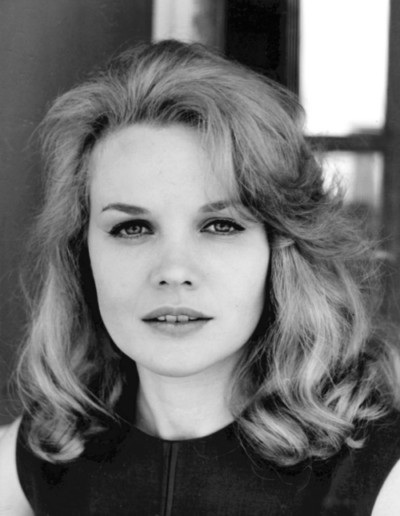
Carroll Baker
Carroll Baker is an American actress. Born May 28, 1931, in Johnstown. Educated at St. Petersburg College and HB Studio. Awards include Golden Globes, star on Hollywood Walk of Fame and Hasty Pudding Woman of the Year.
Facts
19 facts · 1 confirmed by two sources · 3 cited · 15 from one source
Where this comes from
Papalocal keeps its own record. It started from these sources; what each one said is kept here as it was copied, so a change on their side never changes this page by itself. Tap one to read its version.
What Wikidata says · copied November 13, 2026 · revision 2562730003
- Described as
- American actress (born 1931)
- Other names
- Karolina Piekarski
- Born
- May 28, 1931 · 6 references
- Born in
- Johnstown
- Citizen of
- United States
- Occupation
- actor · 2 references; stage actor; novelist; film actor; writer; television actor · 1 reference; dancer · 1 reference
- Worked for
- Warner Bros. Entertainment
- Education
- St. Petersburg College; HB Studio
- Awards
- Golden Globes; star on Hollywood Walk of Fame (1960) · 2 references; Hasty Pudding Woman of the Year (1957)
- Spouse
- Jack Garfein (1955–1969); Donald Burton (1978–2007)
- Children
- Blanche Baker
- Wikipedias with a page
- 55
Wikidata item Q233891 (wikidata.org/wiki/Q233891), public domain (CC0). Copied November 13, 2026.
What Wikipedia says · copied November 13, 2026 · revision 1381423181
Carroll Baker (born May 28, 1931) is a retired American actress. After studying under Lee Strasberg at the Actors Studio, Baker began performing on Broadway in 1954. From there, she was recruited by director Elia Kazan to play the lead in the adaptation of two Tennessee Williams plays into the film Baby Doll in 1956. Her role in the film as a coquettish but sexually naïve Southern bride earned her a nomination for the Academy Award for Best Actress.
Baker had other early film roles in Giant (1956) and the romantic comedy But Not for Me (1959). In 1961, she appeared in the controversial independent film Something Wild, directed by her then-husband Jack Garfein, playing a traumatized rape victim. She went on to star in several critically acclaimed Westerns in the 1950s and 1960s, such as The Big Country (1958), How the West Was Won (1962), and Cheyenne Autumn (1964).
In the mid-1960s, as a contract player for Paramount Pictures, Baker became a sex symbol after appearing as a hedonistic widow in The Carpetbaggers (1964). The film's producer, Joseph E. Levine, cast her in Sylvia before giving her the role of Jean Harlow in the biopic Harlow (1965). Despite significant prepublicity, Harlow was a critical failure, and Baker relocated to Italy in 1966 amid a legal dispute over her contract with Paramount and Levine's overseeing of her career. In Europe, she spent the next 10 years starring in hard-edged giallo and horror films, including Romolo Guerrieri's The Sweet Body of Deborah (1968), a series of four films with Umberto Lenzi beginning with Orgasmo (1969) and ending with Knife of Ice (1972), and Corrado Farina's Baba Yaga (1973). She re-emerged for American audiences as a character actress in the Andy Warhol–produced dark comedy Bad (1977).
Baker appeared in supporting roles in several acclaimed dramas in the 1980s, including the true-crime drama Star 80 (1983) as the mother of murder victim Dorothy Stratten, and the racial drama Native Son (1986), based on the novel by Richard Wright. In 1987, she had a supporting part in Ironweed (1987). Through the 1990s, Baker had guest roles in several television series, such as Murder, She Wrote; L.A. Law, and Roswell. She also had supporting parts in several big-budget films, such as Kindergarten Cop (1990) and the David Fincher–directed thriller The Game (1997). She formally retired from acting in 2003. In addition to acting, Baker is also the author of two autobiographies and two novels.
- Born, in its opening lines
- May 28, 1931
From the Wikipedia article “Carroll Baker” (en.wikipedia.org/wiki/Carroll_Baker), by its contributors, under CC BY-SA 4.0 (creativecommons.org/licenses/by-sa/4.0/). Copied November 13, 2026; not changed.
Confirmed Two sources agree. Cited One source, and it names where it got it. One source One source, without a reference of its own. Sources disagree The sources disagree. We show the best-supported value and keep theirs below.
