
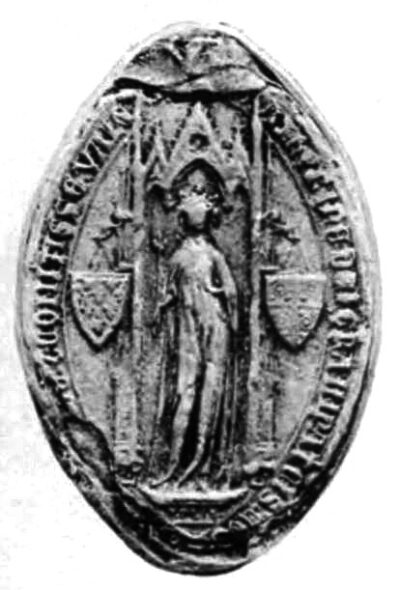
Catherine of Courtenay
Catherine of Courtenay was an Empress of Latin Constantinople. Born November 25, 1274. Died October 11, 1307, in Paris.
Facts
13 facts · 2 confirmed by two sources · 0 cited · 11 from one source
Where this comes from
Papalocal keeps its own record. It started from these sources; what each one said is kept here as it was copied, so a change on their side never changes this page by itself. Tap one to read its version.
What Wikidata says · copied November 17, 2026 · revision 2550834322
- Described as
- Empress of Latin Constantinople (1274-1307)
- Other names
- Catherine I
- Born
- November 25, 1274
- Died
- October 11, 1307
- Died in
- Paris
- Buried in
- Basilica of Saint-Denis
- Citizen of
- France
- Spouse
- Charles of Valois (1301–) · 1 reference
- Children
- Catherine of Valois; Joan of Valois, Countess of Beaumont; Jean de Valois; Isabelle of Valois
- Father
- Philip of Courtenay
- Mother
- Beatrice of Sicily, Latin Empress
- Religion
- Christianity
- Wikipedias with a page
- 25
Wikidata item Q267327 (wikidata.org/wiki/Q267327), public domain (CC0). Copied November 17, 2026.
What Wikipedia says · copied November 17, 2026 · revision 1386187218
Catherine of Courtenay (25 November 1274 – 11 October 1307), also known as Catherine I, was the claimant to the defunct Latin Empire from 1283 to 1307, although she lived in exile and only held authority over crusader states in Greece. In 1301, she became the second wife of Count Charles of Valois, by whom she had one son and three daughters; the eldest of these, Catherine of Valois-Courtenay, succeeded her as titular empress.
- Born, in its opening lines
- November 25, 1274
- Died, in its opening lines
- October 11, 1307
From the Wikipedia article “Catherine of Courtenay” (en.wikipedia.org/wiki/Catherine_of_Courtenay), by its contributors, under CC BY-SA 4.0 (creativecommons.org/licenses/by-sa/4.0/). Copied November 17, 2026; not changed.
Confirmed Two sources agree. Cited One source, and it names where it got it. One source One source, without a reference of its own. Sources disagree The sources disagree. We show the best-supported value and keep theirs below.
