
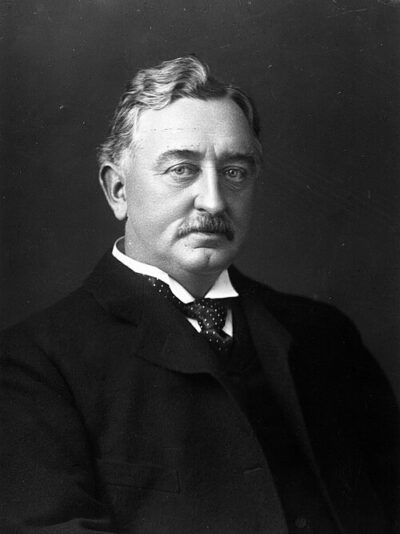
Cecil John Rhodes
Cecil John Rhodes was a British businessman, mining magnate and politician in South Africa. Born July 5, 1853, in Bishop's Stortford. Died March 26, 1902, in Muizenberg. Positions held include Member of the Privy Council of Ireland, Member of the Privy Council of the United Kingdom and Prime Minister of the Cape Colony (1890–1896).
Facts
24 facts · 2 confirmed by two sources · 8 cited · 14 from one source
Where this comes from
Papalocal keeps its own record. It started from these sources; what each one said is kept here as it was copied, so a change on their side never changes this page by itself. Tap one to read its version.
What Wikidata says · copied November 16, 2026 · revision 2568934644
- Described as
- British businessman, mining magnate and politician in South Africa (1853-1902)
- Born
- July 5, 1853 · 7 references
- Died
- March 26, 1902 · 7 references
- Born in
- Bishop's Stortford · 1 reference
- Died in
- Muizenberg · 2 references
- Buried in
- Rhodes Grave
- Cause of death
- heart failure · 1 reference
- Name at birth
- Cecil John Rhodes
- Citizen of
- United Kingdom of Great Britain and Ireland
- Occupation
- entrepreneur; politician · 1 reference; economist; explorer · 1 reference; colonizer; patron of the arts; industrialist · 1 reference; businessperson · 1 reference
- Positions held
- Member of the Privy Council of Ireland; Member of the Privy Council of the United Kingdom; Prime Minister of the Cape Colony (1890–1896)
- Field
- diamond mining · 1 reference; politics · 1 reference
- Siblings
- Frank Rhodes · 1 reference
- Religion
- Anglicanism
- Lived in
- Kimberley
- Wikipedias with a page
- 96
Wikidata item Q19825 (wikidata.org/wiki/Q19825), public domain (CC0). Copied November 16, 2026.
What Wikipedia says · copied November 16, 2026 · revision 1383045353
Cecil John Rhodes ( SES-əl ROHDZ; 5 July 1853 – 26 March 1902) was a British mining magnate and politician in southern Africa who served as Prime Minister of the Cape Colony from 1890 to 1896. He and his British South Africa Company founded the southern African territory of Rhodesia (now Zimbabwe and Zambia), which the company named after him in 1895. He also devoted much effort to realizing his vision of a Cape to Cairo Railway through British territory. Rhodes set up the Rhodes Scholarship, which is funded by his estate.
The son of a vicar, Rhodes was born in Netteswell House, Bishop's Stortford, Hertfordshire. At seventeen his family sent him to South Africa in the hopes the climate might improve his poor health. At eighteen, he entered the diamond trade at Kimberley in 1871 and with funding from Rothschild & Co, began to systematically buy out and consolidate diamond mines. Over the next two decades, he gained a near-complete monopoly of the world diamond market. In 1888, he founded the diamond company De Beers, which retains its prominence into the 21st century.
Rhodes entered the Cape Parliament at the age of 27 in 1881, and in 1890, he became prime minister. As prime minister, he took (through eminent domain) land from black Africans with the Glen Grey Act, while also tripling the wealth requirement for voting under the Franchise and Ballot Act, effectively barring black people from taking part in elections. After overseeing the formation of Rhodesia during the early 1890s, he was forced to resign in 1896 after the disastrous Jameson Raid, an unauthorised attack on Paul Kruger's South African Republic (or Transvaal). His career never recovered, and after years of ill health and cardiovascular issues, he died in 1902. At his request he was buried at Malindidzimu in what is now Zimbabwe. In his last will, he provided for the establishment of the international Rhodes Scholarship at University of Oxford, the oldest graduate scholarship in the world.With the rise of international anti-racist movements like Rhodes Must Fall, Rhodes's legacy is a matter of debate. Critics cite his confiscation of land from the black indigenous population of the Cape Colony, and his promotion of false claims that southern African archeological sites such as Great Zimbabwe were built by European civilisations.
- Born, in its opening lines
- July 5, 1853
- Died, in its opening lines
- March 26, 1902
From the Wikipedia article “Cecil Rhodes” (en.wikipedia.org/wiki/Cecil_Rhodes), by its contributors, under CC BY-SA 4.0 (creativecommons.org/licenses/by-sa/4.0/). Copied November 16, 2026; not changed.
Confirmed Two sources agree. Cited One source, and it names where it got it. One source One source, without a reference of its own. Sources disagree The sources disagree. We show the best-supported value and keep theirs below.
