
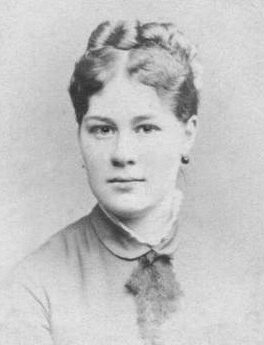
Cecilia Beaux
Cecilia Beaux was an American artist. Born May 1, 1855, in Philadelphia. Died September 17, 1942, in Gloucester. Known for Sita and Sarita. Educated at Académie Julian and Pennsylvania Academy of the Fine Arts. Awards include Mary Smith Prize.
Facts
18 facts · 2 confirmed by two sources · 7 cited · 9 from one source
Where this comes from
Papalocal keeps its own record. It started from these sources; what each one said is kept here as it was copied, so a change on their side never changes this page by itself. Tap one to read its version.
What Wikidata says · copied November 15, 2026 · revision 2547938403
- Described as
- American artist (1855-1942)
- Other names
- Eliza-Cecilia Beaux, Beaux, Eliza Cecilia Beaux, Eliza Cecilia
- Born
- May 1, 1855 · 8 references
- Died
- September 17, 1942 · 4 references
- Born in
- Philadelphia · 3 references
- Died in
- Gloucester · 2 references
- Buried in
- West Laurel Hill Cemetery · 1 reference
- Citizen of
- United States
- Occupation
- painter · 1 reference; artist · 3 references
- Worked for
- Pennsylvania Academy of the Fine Arts
- Education
- Académie Julian; Pennsylvania Academy of the Fine Arts · 1 reference
- Member of
- American Academy of Arts and Letters
- Genre
- portrait · 1 reference
- Known for
- Sita and Sarita
- Awards
- Mary Smith Prize
- Field
- portrait painting · 1 reference
- Mother
- Cecilia Leavitt
- Siblings
- Aimee Ernesta Beaux
- Wikipedias with a page
- 29
Wikidata item Q466677 (wikidata.org/wiki/Q466677), public domain (CC0). Copied November 15, 2026.
What Wikipedia says · copied November 15, 2026 · revision 1376306702
Eliza Cecilia Beaux (May 1, 1855 – September 17, 1942) was an American artist and the first woman to teach art at the Pennsylvania Academy of the Fine Arts. Known for her elegant and sensitive portraits of friends, relatives, and Gilded Age patrons, Beaux painted many famous subjects including First Lady Edith Roosevelt, Admiral Sir David Beatty and Georges Clemenceau.
Beaux was trained in Philadelphia and went on to study in Paris where she was influenced by academic artists Tony Robert-Fleury and William-Adolphe Bouguereau as well as the work of Édouard Manet and Edgar Degas. Her style was compared to that of John Singer Sargent; at one exhibition, Bernard Berenson joked that her paintings were the best Sargents in the room. Like her instructor William Sartain, she believed there was a connection between physical characteristics and behavioral traits.
Beaux was awarded a gold medal for lifetime achievement by the National Institute of Arts and Letters, and honored by Eleanor Roosevelt as "the American woman who had made the greatest contribution to the culture of the world".
- Born, in its opening lines
- May 1, 1855
- Died, in its opening lines
- September 17, 1942
From the Wikipedia article “Cecilia Beaux” (en.wikipedia.org/wiki/Cecilia_Beaux), by its contributors, under CC BY-SA 4.0 (creativecommons.org/licenses/by-sa/4.0/). Copied November 15, 2026; not changed.
Confirmed Two sources agree. Cited One source, and it names where it got it. One source One source, without a reference of its own. Sources disagree The sources disagree. We show the best-supported value and keep theirs below.
