
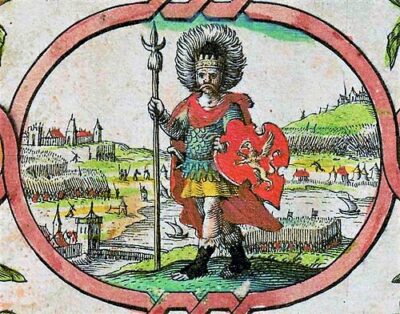
Cerdic of Wessex
Cerdic of Wessex was the 1st King of Wessex from 519 to 534. Died 534. Positions held include King of Wessex (519–534).
Facts
9 facts · 0 confirmed by two sources · 5 cited · 4 from one source
Where this comes from
Papalocal keeps its own record. It started from these sources; what each one said is kept here as it was copied, so a change on their side never changes this page by itself. Tap one to read its version.
What Wikidata says · copied November 16, 2026 · revision 2557835560
- Described as
- 1st King of Wessex from 519 to 534
- Died
- 534 · 1 reference
- Born in
- Germania · 1 reference
- Occupation
- ruler
- Positions held
- King of Wessex (519–534)
- Spouse
- unnamed wife of Cerdic of Wessex · 1 reference
- Children
- Creoda of Wessex · 3 references; Cynric of Wessex · 1 reference
- Father
- Elesa · 1 reference
- Siblings
- unnamed sister of Cerdic of Wessex
- Wikipedias with a page
- 38
Wikidata item Q366048 (wikidata.org/wiki/Q366048), public domain (CC0). Copied November 16, 2026.
What Wikipedia says · copied November 16, 2026 · revision 1371591852
Cerdic ( CHER-ditch; Latin: Cerdicus) is described in the Anglo-Saxon Chronicle as a leader of the Anglo-Saxon settlement of Britain, being the founder and first king of Wessex, reigning from around 519 to around 534 AD. Subsequent kings of Wessex were each claimed by the Chronicle to descend in some manner from Cerdic. His origin, ethnicity, and even his very existence have been extensively disputed. However, though claimed as the founder of Wessex by later West Saxon kings, he would have been known to contemporaries as king of the Gewissae, a folk or tribal group. In a charter dating to 686, Cædwalla was the first king of the Gewissae to call himself 'King of the West Saxons'.
From the Wikipedia article “Cerdic of Wessex” (en.wikipedia.org/wiki/Cerdic_of_Wessex), by its contributors, under CC BY-SA 4.0 (creativecommons.org/licenses/by-sa/4.0/). Copied November 16, 2026; not changed.
Confirmed Two sources agree. Cited One source, and it names where it got it. One source One source, without a reference of its own. Sources disagree The sources disagree. We show the best-supported value and keep theirs below.
