
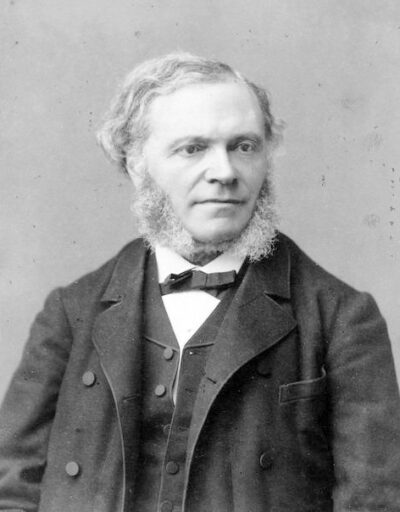
César Franck
César Franck was a Belgian-French composer and organist. Born December 10, 1822, in Liège. Died November 8, 1890, in boulevard Saint-Michel. Known for Prelude, Chorale and Fugue, Les Béatitudes and Les Djinns. Educated at Conservatoire de Paris and Royal Conservatory of Liège. Awards include Knight of the Legion of Honour and Knight of the French Order of Academic Palms.
Facts
35 facts · 2 confirmed by two sources · 8 cited · 25 from one source
Where this comes from
Papalocal keeps its own record. It started from these sources; what each one said is kept here as it was copied, so a change on their side never changes this page by itself. Tap one to read its version.
What Wikidata says · copied November 16, 2026 · revision 2568947118
- Described as
- Belgian-French composer and organist (1822–1890)
- Other names
- César Auguste Jean Guillaume Hubert Franck, César-Auguste-Jean-Guillaume-Hubert Franck, Cesar Franck, Cesar-Auguste-Jean-Guillaume-Hubert Franck
- Born
- December 10, 1822 · 17 references
- Died
- November 8, 1890 · 15 references
- Born in
- Liège · 4 references
- Died in
- boulevard Saint-Michel · 1 reference
- Buried in
- Montparnasse Cemetery
- Cause of death
- pleural effusion
- Name at birth
- César Auguste Jean Guillaume Hubert Franck · 1 reference
- Citizen of
- United Kingdom of the Netherlands (1822–1831); Belgium (1831–1870); France (1870–1890)
- Occupation
- composer · 1 reference; organist · 1 reference; music educator; pianist; teacher · 1 reference
- Worked for
- Conservatoire de Paris; Royal Conservatory of Brussels · 1 reference
- Education
- Conservatoire de Paris; Royal Conservatory of Liège · 1 reference
- Genre
- opera; symphony; classical music
- Instrument
- pipe organ · 1 reference
- Known for
- Prelude, Chorale and Fugue; Les Béatitudes; Les Djinns; Symphony in D minor
- Awards
- Knight of the Legion of Honour (1885) · 1 reference; Knight of the French Order of Academic Palms (1884)
- Spouse
- Félicité Saillot Desmousseaux (1848–)
- Children
- Georges Franck
- Father
- Nicolas-Joseph Franck
- Mother
- Marie-Catherine-Barbe Frings
- Siblings
- Joseph Franck · 2 references
- Website
- http://www.cesar-franck.org/
- Wikipedias with a page
- 58
Wikidata item Q50187 (wikidata.org/wiki/Q50187), public domain (CC0). Copied November 16, 2026.
What Wikipedia says · copied November 16, 2026 · revision 1362775913
César Auguste Jean Guillaume Hubert Franck (French: [sezaʁ oɡyst ʒɑ̃ ɡijom ybɛʁ fʁɑ̃k]; 10 December 1822 – 8 November 1890) was a French Romantic composer, pianist, organist, and music teacher born in present-day Belgium.
He was born in Liège (which at the time of his birth was part of the United Kingdom of the Netherlands). He gave his first concerts there in 1834 and studied privately in Paris from 1835, where his teachers included Anton Reicha. After a brief return to Belgium, and a disastrous reception of an early oratorio Ruth, he moved to Paris, where he married and embarked on a career as teacher and organist. He gained a reputation as a formidable musical improviser, and travelled widely within France to demonstrate new instruments built by Aristide Cavaillé-Coll.In 1859, he became titular organist at the church Sainte-Clotilde, a position he retained for the rest of his life. He became professor at the Paris Conservatoire in 1872; he took French nationality, a requirement of the appointment. After acquiring the professorship, Franck wrote several pieces that have entered the standard classical repertoire, including symphonic, chamber, and keyboard works for pipe organ and piano. As a teacher and composer he had a vast following of composers and other musicians. His pupils included Ernest Chausson, Vincent d'Indy, Henri Duparc, Guillaume Lekeu, Albert Renaud, Charles Tournemire, Gabriel Pierné and Louis Vierne.
His best known works include the Symphony in D minor, the Violin Sonata and a setting of the Panis angelicus.
- Born, in its opening lines
- December 10, 1822
- Died, in its opening lines
- November 8, 1890
From the Wikipedia article “César Franck” (en.wikipedia.org/wiki/César_Franck), by its contributors, under CC BY-SA 4.0 (creativecommons.org/licenses/by-sa/4.0/). Copied November 16, 2026; not changed.
Confirmed Two sources agree. Cited One source, and it names where it got it. One source One source, without a reference of its own. Sources disagree The sources disagree. We show the best-supported value and keep theirs below.
