
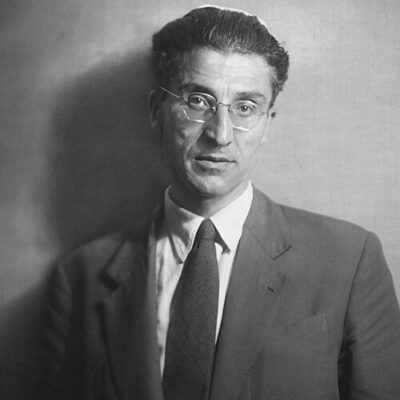
Cesare Pavese
Cesare Pavese was an Italian writer, literary critic, and translator. Born September 9, 1908, in Santo Stefano Belbo. Died August 27, 1950, in Turin. Known for Dialogues with Leucò and The Moon and the Bonfires. Educated at University of Turin and Liceo Classico Massimo D'Azeglio. Awards include Strega Prize.
Facts
34 facts · 2 confirmed by two sources · 14 cited · 18 from one source
Where this comes from
Papalocal keeps its own record. It started from these sources; what each one said is kept here as it was copied, so a change on their side never changes this page by itself. Tap one to read its version.
What Wikidata says · copied November 16, 2026 · revision 2568842763
- Described as
- Italian writer, literary critic, and translator (1908–1950)
- Born
- September 9, 1908 · 13 references
- Died
- August 27, 1950 · 13 references
- Born in
- Santo Stefano Belbo · 3 references
- Died in
- Turin · 4 references
- Buried in
- Santo Stefano Belbo
- Cause of death
- drug overdose
- Citizen of
- Italy (1946–) · 1 reference; Kingdom of Italy (–1946)
- Occupation
- linguist; writer · 4 references; translator · 2 references; literary editor; screenwriter · 1 reference; literary critic · 1 reference; journalist · 1 reference; biographer
- Education
- University of Turin (1926–1930); Liceo Classico Massimo D'Azeglio; Sociale
- Genre
- poetry
- Known for
- Dialogues with Leucò; The Moon and the Bonfires
- Awards
- Strega Prize (1950)
- Field
- creative and professional writing · 1 reference; prose · 1 reference; poetry · 1 reference; literary criticism · 1 reference; translation · 1 reference; translation from English · 1 reference
- Religion
- atheism
- Lived in
- Santo Stefano Belbo (1908–1916); Turin (1916–1950); Brancaleone (1935–1936); Rome (1945–1946)
- Wikipedias with a page
- 80
Wikidata item Q2022 (wikidata.org/wiki/Q2022), public domain (CC0). Copied November 16, 2026.
What Wikipedia says · copied November 16, 2026 · revision 1384982757
Cesare Pavese (UK: pav-AY-zay, -zee, Italian: [ˈtʃeːzare paˈveːze, ˈtʃɛː-, -eːse]; 9 September 1908 – 27 August 1950) was an Italian novelist, poet, short story writer, translator, literary critic, and essayist. He is often referred to as one of the most influential Italian writers of his time.
Pavese was reportedly apolitical in the 1930s, but he was moving in antifascist circles. He served a short sentence as a political prisoner. Though eligible for drafting into the Italian Armed Forces during World War II, he did not see any active service. He spent part of the war hospitalized due to asthma. Many of his friends in Turin joined the partisans, but Pavese took no part in the armed struggle in the vicinity of the city. After the war, Pavese joined the Italian Communist Party and worked on the party's newspaper, L'Unità. Toward the end of his life, he was suffering from depression and political disillusionment. He died by suicide by an overdose of barbiturates.
- Born, in its opening lines
- September 9, 1908
- Died, in its opening lines
- August 27, 1950
From the Wikipedia article “Cesare Pavese” (en.wikipedia.org/wiki/Cesare_Pavese), by its contributors, under CC BY-SA 4.0 (creativecommons.org/licenses/by-sa/4.0/). Copied November 16, 2026; not changed.
Confirmed Two sources agree. Cited One source, and it names where it got it. One source One source, without a reference of its own. Sources disagree The sources disagree. We show the best-supported value and keep theirs below.
