
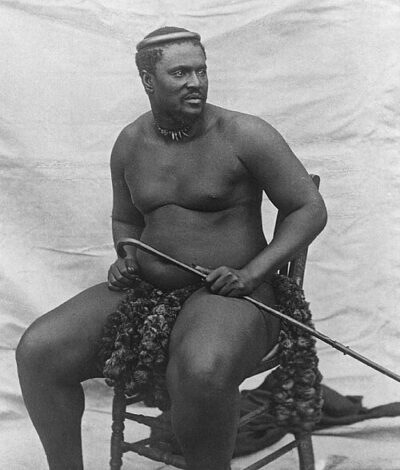
Cetshwayo kaMpande
Cetshwayo kaMpande was a King of the Zulu Kingdom. Born 1826, in KwaZulu-Natal. Died February 8, 1884, in Eshowe.
Facts
9 facts · 2 confirmed by two sources · 2 cited · 4 from one source · 1 where the sources disagree
What’s different
- Born in: we show KwaZulu-Natal (Sources disagree). Wikidata also lists Eshowe
Where this comes from
Papalocal keeps its own record. It started from these sources; what each one said is kept here as it was copied, so a change on their side never changes this page by itself. Tap one to read its version.
What Wikidata says · copied November 16, 2026 · revision 2563644532
- Described as
- King of the Zulu Kingdom (1826–1884)
- Born
- 1826 · 5 references
- Died
- February 8, 1884 · 4 references
- Born in
- Eshowe; KwaZulu-Natal · 1 reference
- Died in
- Eshowe
- Citizen of
- Zulu Kingdom
- Occupation
- monarch · 1 reference
- Children
- Dinuzulu kaCetshwayo · 1 reference
- Father
- Mpande kaSenzangakhona
- Siblings
- Dabulamanzi kaMpande
- Wikipedias with a page
- 31
Wikidata item Q380403 (wikidata.org/wiki/Q380403), public domain (CC0). Copied November 16, 2026.
What Wikipedia says · copied November 16, 2026 · revision 1384229896
Cetshwayo kaMpande (; Zulu pronunciation: [ᵏǀétʃwajo kámpande]; c. 1826 – 8 February 1884) was the king of the Zulu Kingdom from 1873 to 1884 and its Commander in Chief during the Anglo-Zulu War of 1879. His name has been rendered as Cetywayo, Cetewayo or Cetshwayo. Cetshwayo consistently opposed the war, sought fruitlessly to make peace with the British, and was defeated and exiled following the Zulu defeat in the war. He was later allowed to return to Zululand, where he died in 1884.
- Born, in its opening lines
- c. 1826
- Died, in its opening lines
- February 8, 1884
From the Wikipedia article “Cetshwayo” (en.wikipedia.org/wiki/Cetshwayo), by its contributors, under CC BY-SA 4.0 (creativecommons.org/licenses/by-sa/4.0/). Copied November 16, 2026; not changed.
Confirmed Two sources agree. Cited One source, and it names where it got it. One source One source, without a reference of its own. Sources disagree The sources disagree. We show the best-supported value and keep theirs below.
