
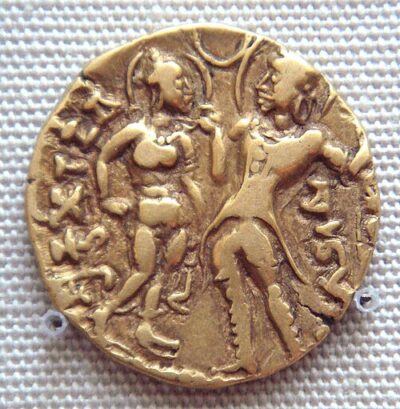
Chandragupta I
Chandragupta I was the 4th-century king of the Gupta Empire. Born 3rd century. Died 4th century. Positions held include Gupta emperor (320–335) and emperor.
Facts
10 facts · 0 confirmed by two sources · 0 cited · 8 from one source · 2 where the sources disagree
What’s different
- Born: we show 3rd century (Sources disagree). Wikipedia says 319
- Died: we show 4th century (Sources disagree). Wikipedia says 335
Where this comes from
Papalocal keeps its own record. It started from these sources; what each one said is kept here as it was copied, so a change on their side never changes this page by itself. Tap one to read its version.
What Wikidata says · copied November 16, 2026 · revision 2557836060
- Described as
- 4th-century king of the Gupta Empire
- Other names
- Candragupta, Chandragupta I.a
- Born
- 3rd century
- Died
- 4th century
- Citizen of
- Gupta Empire
- Occupation
- sovereign
- Positions held
- Gupta emperor (320–335); emperor
- Spouse
- Kumaradevi · 1 reference
- Children
- Samudragupta; Prabhavati Gupta
- Father
- Ghatotkacha Gupta
- Wikipedias with a page
- 46
Wikidata item Q849802 (wikidata.org/wiki/Q849802), public domain (CC0). Copied November 16, 2026.
What Wikipedia says · copied November 16, 2026 · revision 1382962486
Chandragupta I (Gupta script: Cha-ndra-gu-pta, r. c. 319–335) was a monarch of the Gupta Empire, who ruled in northern and central India. His title "Mahārājadhirāja" (lit. 'Great king of kings') suggests that he was the first suzerain ruler of the dynasty. It is not certain how he turned his small ancestral kingdom into an empire, although a widely accepted theory among modern historians is that his marriage to the Licchavi princess Kumaradevi helped him extend his political power. Their son Samudragupta further expanded the Gupta Empire.
- Born, in its opening lines
- 319
- Died, in its opening lines
- 335
From the Wikipedia article “Chandragupta I” (en.wikipedia.org/wiki/Chandragupta_I), by its contributors, under CC BY-SA 4.0 (creativecommons.org/licenses/by-sa/4.0/). Copied November 16, 2026; not changed.
Confirmed Two sources agree. Cited One source, and it names where it got it. One source One source, without a reference of its own. Sources disagree The sources disagree. We show the best-supported value and keep theirs below.
