
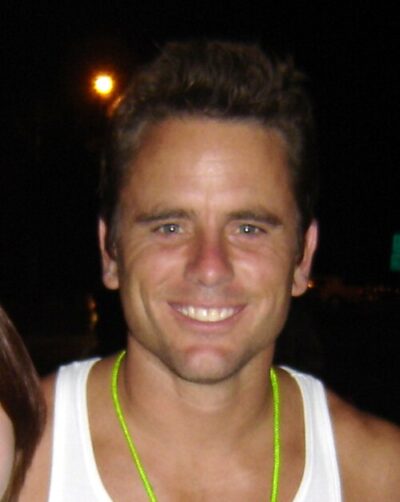
Charles Esten
Charles Esten is an American actor, musician and comedian. Born September 9, 1965, in Pittsburgh. Educated at College of William & Mary and Alexandria City High School.
Facts
14 facts · 1 confirmed by two sources · 1 cited · 12 from one source
Where this comes from
Papalocal keeps its own record. It started from these sources; what each one said is kept here as it was copied, so a change on their side never changes this page by itself. Tap one to read its version.
What Wikidata says · copied November 16, 2026 · revision 2563819104
- Described as
- American actor, musician and comedian
- Other names
- Chip Esten, Charles Esten Puskar III
- Born
- September 9, 1965 · 3 references
- Born in
- Pittsburgh
- Name at birth
- Charles Esten Puskar III
- Citizen of
- United States
- Occupation
- comedian; singer; film actor; television actor; improviser; actor · 1 reference
- Education
- College of William & Mary; Alexandria City High School · 1 reference
- Instrument
- voice
- Lived in
- United Kingdom
- Wikipedias with a page
- 22
Wikidata item Q1064297 (wikidata.org/wiki/Q1064297), public domain (CC0). Copied November 16, 2026.
What Wikipedia says · copied November 16, 2026 · revision 1381695151
Charles Esten (born September 9, 1965) also known professionally as Chip Esten, is an American actor, musician, singer-songwriter, and improv comedian.
Esten played the role of country singer Deacon Claybourne on the drama Nashville from 2012 to 2018, which subsequently kickstarted his own musical career. He also played Ward Cameron on the teen drama series Outer Banks. He appeared in the improvisation show Whose Line Is It Anyway? as a series regular between 1999–2005 and returned with guest appearances from 2017–2020.
- Born, in its opening lines
- September 9, 1965
From the Wikipedia article “Charles Esten” (en.wikipedia.org/wiki/Charles_Esten), by its contributors, under CC BY-SA 4.0 (creativecommons.org/licenses/by-sa/4.0/). Copied November 16, 2026; not changed.
Confirmed Two sources agree. Cited One source, and it names where it got it. One source One source, without a reference of its own. Sources disagree The sources disagree. We show the best-supported value and keep theirs below.
