
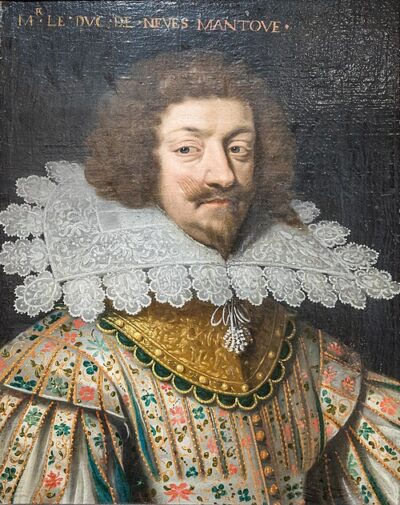
Charles Gonzaga, Duke of Mantua and Montferrat
Charles Gonzaga, Duke of Mantua and Montferrat was a duke of Mantua and Montferrat. Born May 6, 1580, in Paris. Died September 22, 1637, in Mantua. Positions held include Duke of Montferrat (1627–1637).
Facts
17 facts · 2 confirmed by two sources · 6 cited · 9 from one source
Where this comes from
Papalocal keeps its own record. It started from these sources; what each one said is kept here as it was copied, so a change on their side never changes this page by itself. Tap one to read its version.
What Wikidata says · copied November 18, 2026 · revision 2567494840
- Described as
- duke of Mantua and Montferrat (1580–1637)
- Born
- May 6, 1580
- Died
- September 22, 1637 · 2 references
- Born in
- Paris · 1 reference
- Died in
- Mantua · 1 reference
- Buried in
- Basilica Palatina di Santa Barbara
- Citizen of
- France
- Occupation
- aristocrat · 1 reference
- Positions held
- Duke of Montferrat (1627–1637)
- Spouse
- Catherine of Guise (1599–) · 2 references
- Children
- Marie Louise Gonzaga; Charles Gonzaga; Francis Gonzaga, Duke of Rethel; Ferdinand Gonzaga; Anne Gonzaga · 1 reference; Bénédicte de Mantoue
- Father
- Louis Gonzaga · 1 reference
- Mother
- Henriette of Cleves
- Wikipedias with a page
- 22
Wikidata item Q547017 (wikidata.org/wiki/Q547017), public domain (CC0). Copied November 18, 2026.
What Wikipedia says · copied November 18, 2026 · revision 1374285214
Charles I Gonzaga (Italian: Carlo I Gonzaga; 6 May 1580 – 22 September 1637) was Duke of Mantua and Duke of Montferrat from 1627 until his death. He was also Charles III as Duke of Nevers and Rethel, as well as Prince of Arche and Charleville.
- Born, in its opening lines
- May 6, 1580
- Died, in its opening lines
- September 22, 1637
From the Wikipedia article “Charles I Gonzaga” (en.wikipedia.org/wiki/Charles_I_Gonzaga), by its contributors, under CC BY-SA 4.0 (creativecommons.org/licenses/by-sa/4.0/). Copied November 18, 2026; not changed.
Confirmed Two sources agree. Cited One source, and it names where it got it. One source One source, without a reference of its own. Sources disagree The sources disagree. We show the best-supported value and keep theirs below.
