
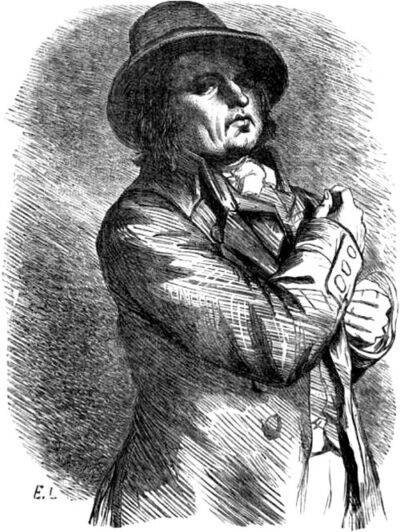
Charles-Henri Sanson
Charles-Henri Sanson was a French executioner. Born February 15, 1739, in Paris. Died July 4, 1806, in Paris.
Facts
11 facts · 2 confirmed by two sources · 4 cited · 5 from one source
Where this comes from
Papalocal keeps its own record. It started from these sources; what each one said is kept here as it was copied, so a change on their side never changes this page by itself. Tap one to read its version.
What Wikidata says · copied November 16, 2026 · revision 2568408715
- Described as
- French executioner(1739-1806)
- Other names
- Monsieur de Paris, Charles Henri Sanson
- Born
- February 15, 1739 · 3 references
- Died
- July 4, 1806 · 3 references
- Born in
- Paris · 1 reference
- Died in
- Paris · 1 reference
- Buried in
- Montmartre Cemetery · 1 reference
- Citizen of
- France
- Occupation
- executioner · 1 reference; physician; violinist
- Children
- Henri Sanson
- Father
- Charles-Jean-Baptiste Sanson
- Wikipedias with a page
- 29
Wikidata item Q950418 (wikidata.org/wiki/Q950418), public domain (CC0). Copied November 16, 2026.
What Wikipedia says · copied November 16, 2026 · revision 1382356034
Charles-Henri Sanson (French: [ʃaʁl ɑ̃ʁi sɑ̃sɔ̃]; 15 February 1739 – 4 July 1806), was the royal executioner of France during the reign of King Louis XVI, and later chief executioner of the First French Republic. He administered capital punishment in Paris for over 40 years ("Exécuteur des arrêts criminels de Paris"). He is renowned for carrying out nearly 3,000 executions. During the French Revolution, he was the executioner of Louis XVI, Marie-Antoinette, and Robespierre.
- Born, in its opening lines
- February 15, 1739
- Died, in its opening lines
- July 4, 1806
From the Wikipedia article “Charles-Henri Sanson” (en.wikipedia.org/wiki/Charles-Henri_Sanson), by its contributors, under CC BY-SA 4.0 (creativecommons.org/licenses/by-sa/4.0/). Copied November 16, 2026; not changed.
Confirmed Two sources agree. Cited One source, and it names where it got it. One source One source, without a reference of its own. Sources disagree The sources disagree. We show the best-supported value and keep theirs below.
