
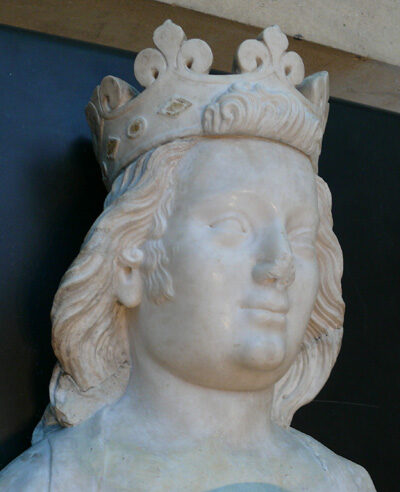
Charles IV of France
Charles IV of France was a King of France and Navarre from 1322 to 1328. Born May 18, 1294, in Creil. Died February 1, 1328, in Château de Vincennes. Positions held include King of France (1322–1328) and Sovereign of Navarre (1322–1328).
Facts
21 facts · 1 confirmed by two sources · 6 cited · 13 from one source · 1 where the sources disagree
What’s different
- Born: we show May 18, 1294 (Sources disagree). Wikipedia says June 19, 1294
Where this comes from
Papalocal keeps its own record. It started from these sources; what each one said is kept here as it was copied, so a change on their side never changes this page by itself. Tap one to read its version.
What Wikidata says · copied November 16, 2026 · revision 2569846453
- Described as
- King of France and Navarre from 1322 to 1328 (1294–1328)
- Other names
- Charles IV, Karlo IV. Lijepi, Charles IV the Fair, Charles IV, the Fair
- Born
- May 18, 1294 · 1 reference
- Died
- February 1, 1328 · 3 references
- Born in
- Creil
- Died in
- Château de Vincennes · 1 reference
- Buried in
- Basilica of Saint-Denis
- Cause of death
- tuberculosis
- Citizen of
- France
- Occupation
- monarch
- Positions held
- King of France (1322–1328); Sovereign of Navarre (1322–1328)
- Spouse
- Blanche of Burgundy (1308–1322) · 1 reference; Marie of Luxembourg (1322–1324) · 1 reference; Jeanne d'Évreux (1324–1328) · 2 references
- Children
- Marie of France; Blanche of France, Duchess of Orléans
- Father
- Philip IV of France · 1 reference
- Mother
- Joan I of Navarre · 1 reference
- Siblings
- Isabella of France · 1 reference; Louis X of France · 1 reference; Philip V of France · 1 reference
- Religion
- Christianity
- Wikipedias with a page
- 66
Wikidata item Q174964 (wikidata.org/wiki/Q174964), public domain (CC0). Copied November 16, 2026.
What Wikipedia says · copied November 16, 2026 · revision 1383485609
Charles IV (18/19 June 1294 – 1 February 1328), called the Fair (le Bel) in France and the Bald (el Calvo) in Navarre, was the last king of the direct line of the House of Capet, King of France and King of Navarre (as Charles I) from 1322 to 1328. Charles was the third son of Philip IV; like his father, he was known as "the fair" or "the handsome".
Beginning in 1323 Charles was confronted with a peasant revolt in Flanders, and in 1324 he made an unsuccessful bid to be elected Holy Roman Emperor. As Duke of Guyenne, King Edward II of England was a vassal of Charles, but he was reluctant to pay homage to another king. In retaliation, Charles conquered the Duchy of Guyenne in a conflict known as the War of Saint-Sardos (1324). In a peace agreement, Edward II accepted to swear allegiance to Charles and to pay a fine. In exchange, Guyenne was returned to Edward but with a much-reduced territory.
When Charles IV died without a male heir, the senior line of the House of Capet, descended from Philip IV, became extinct. He was succeeded in Navarre by his niece Joan II and in France by his paternal first cousin Philip of Valois. However, the dispute on the succession to the French throne between the Valois monarchs descended in male line from Charles's grandfather Philip III of France, and the English monarchs descended from Charles's sister Isabella, was a factor of the Hundred Years' War.
- Born, in its opening lines
- June 19, 1294
- Died, in its opening lines
- February 1, 1328
From the Wikipedia article “Charles IV of France” (en.wikipedia.org/wiki/Charles_IV_of_France), by its contributors, under CC BY-SA 4.0 (creativecommons.org/licenses/by-sa/4.0/). Copied November 16, 2026; not changed.
Confirmed Two sources agree. Cited One source, and it names where it got it. One source One source, without a reference of its own. Sources disagree The sources disagree. We show the best-supported value and keep theirs below.
