
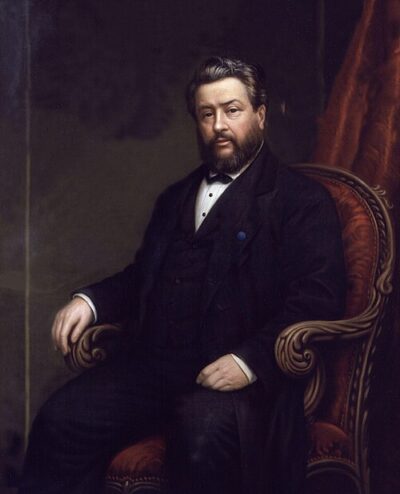
Charles Spurgeon
Charles Spurgeon was a British preacher, author, pastor and evangelist. Born June 19, 1834, in Kelvedon. Died January 31, 1892, in Menton.
Facts
25 facts · 2 confirmed by two sources · 6 cited · 17 from one source
Where this comes from
Papalocal keeps its own record. It started from these sources; what each one said is kept here as it was copied, so a change on their side never changes this page by itself. Tap one to read its version.
What Wikidata says · copied November 16, 2026 · revision 2568742316
- Described as
- British preacher, author, pastor and evangelist (1834-1892)
- Other names
- Charles Haddon Spurgeon, C. H. Spurgeon, Charles Haddon
- Born
- June 19, 1834 · 7 references
- Died
- January 31, 1892 · 6 references
- Born in
- Kelvedon
- Died in
- Menton · 1 reference
- Buried in
- West Norwood Cemetery · 1 reference
- Cause of death
- yellow fever · 1 reference
- Citizen of
- United Kingdom of Great Britain and Ireland
- Occupation
- preacher · 2 references; theologian; autobiographer; hymnwriter; writer · 2 references; pastor
- Worked for
- Metropolitan Tabernacle; The Crystal Palace; New Park Street Chapel
- Field
- theology; Reformed Christianity; literature; religion; Christianity
- Spouse
- Susannah Spurgeon
- Children
- Thomas Spurgeon · 2 references
- Religion
- Baptists; Reformed Baptists
- Wikipedias with a page
- 57
Wikidata item Q278825 (wikidata.org/wiki/Q278825), public domain (CC0). Copied November 16, 2026.
What Wikipedia says · copied November 16, 2026 · revision 1384186650
Charles Haddon Spurgeon (19 June 1834 – 31 January 1892) was an English Particular Baptist preacher. Spurgeon remains highly influential among Christians of various denominations, to some of whom he is known as the "Prince of Preachers." He was a strong figure in the Baptist tradition, defending the 1689 London Baptist Confession of Faith, and opposing the liberal and pragmatic theological tendencies in the Church of his day.
Spurgeon was pastor of the congregation of the New Park Street Chapel (later the Metropolitan Tabernacle) in London for 38 years. He was part of several controversies with the Baptist Union of Great Britain and later he left the denomination over doctrinal convictions.
While at the Metropolitan Tabernacle, he built an Almshouse and the Stockwell Orphanage. He encouraged his congregation to engage actively with the poor of Victorian London. He also founded Spurgeon's College, which was named after him posthumously.
Spurgeon authored sermons, an autobiography, commentaries, books on prayer, devotionals, magazines, poetry, and hymns. Many sermons were transcribed as he spoke and were translated into many languages during his lifetime. He is said to have produced powerful sermons of penetrating thought and precise exposition. His oratory skills are said to have held his listeners spellbound in the Metropolitan Tabernacle, and many Christians hold his writings in exceptionally high regard among devotional literature.
- Born, in its opening lines
- June 19, 1834
- Died, in its opening lines
- January 31, 1892
From the Wikipedia article “Charles Spurgeon” (en.wikipedia.org/wiki/Charles_Spurgeon), by its contributors, under CC BY-SA 4.0 (creativecommons.org/licenses/by-sa/4.0/). Copied November 16, 2026; not changed.
Confirmed Two sources agree. Cited One source, and it names where it got it. One source One source, without a reference of its own. Sources disagree The sources disagree. We show the best-supported value and keep theirs below.
