
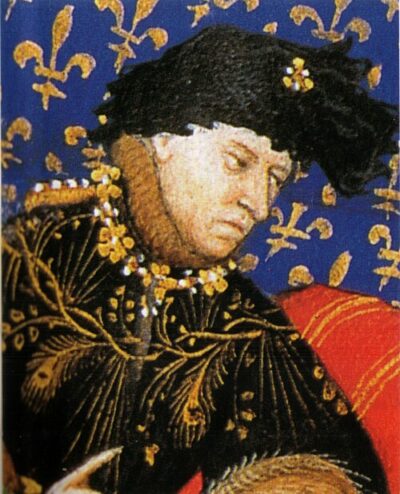
Charles VI of France
Charles VI of France was a King of France from 1380 to 1422. Born December 3, 1368, in Paris. Died October 21, 1422, in Paris. Positions held include King of France (1380–1422). Awards include Golden Rose.
Facts
30 facts · 2 confirmed by two sources · 12 cited · 16 from one source
Where this comes from
Papalocal keeps its own record. It started from these sources; what each one said is kept here as it was copied, so a change on their side never changes this page by itself. Tap one to read its version.
What Wikidata says · copied November 16, 2026 · revision 2569840516
- Described as
- King of France from 1380 to 1422 (1368–1422)
- Other names
- Charles the Beloved, Charles the Mad, Charles VI, Charles VI the Well-Beloved, Charles VI, the Well-Beloved
- Born
- December 3, 1368 · 1 reference
- Died
- October 21, 1422 · 1 reference
- Born in
- Paris · 1 reference
- Died in
- Paris · 1 reference
- Buried in
- Basilica of Saint-Denis
- Cause of death
- malaria
- Citizen of
- Kingdom of France
- Occupation
- monarch
- Positions held
- King of France (1380–1422)
- Awards
- Golden Rose · 1 reference
- Spouse
- Isabeau of Bavaria (1385–1422) · 4 references
- Children
- Isabella of Valois · 1 reference; Joan of France, Duchess of Brittany; Marie, Prioress of Poissy; Michelle of Valois · 1 reference; Louis, Dauphin of France, Duke of Guyenne; John, Dauphin of France, Duke of Touraine · 1 reference; Catherine of Valois · 1 reference; Charles VII of France · 1 reference; Charles de France; Charles, Dauphin of France; Marguerite, bâtarde de France · 1 reference; Philippe de Valois · 1 reference
- Father
- Charles V of France · 1 reference
- Mother
- Joanna of Bourbon · 1 reference
- Siblings
- Catherine of Valois, Countess of Montpensier; Louis I, Duke of Orléans · 1 reference; Jean de France · 1 reference
- Religion
- Christianity; Western Christianity · 1 reference
- Wikipedias with a page
- 80
Wikidata item Q160349 (wikidata.org/wiki/Q160349), public domain (CC0). Copied November 16, 2026.
What Wikipedia says · copied November 16, 2026 · revision 1382264844
Charles VI (3 December 1368 – 21 October 1422), nicknamed the Beloved (French: le Bien-Aimé) and in the 19th century, the Mad (French: le Fol or le Fou), was King of France from 1380 until his death in 1422. He is known for his mental illness and psychotic episodes that plagued him throughout his life, including glass delusion.
Charles ascended the throne at age 11, his father Charles V leaving behind a favorable military situation, marked by the reconquest of most of the English possessions in France. Charles VI was placed under the regency of his uncles: Philip II, Duke of Burgundy; Louis I, Duke of Anjou; John, Duke of Berry; and Louis II, Duke of Bourbon. He decided in 1388, aged 20, to emancipate himself. In 1392, while leading a military expedition against the Duchy of Brittany, the king had his first attack of delirium, during which he attacked his own men in the forest of Le Mans. A few months later, following the Bal des Ardents (January 1393) where he narrowly escaped death from burning, Charles was again placed under the regency of his uncles, the Dukes of Berry and Burgundy.
From then on, and until his death, Charles alternated between periods of mental instability and lucidity. Power was held by his influential uncles and by his wife, Queen Isabeau. His younger brother, Louis I, Duke of Orléans, also aspired to the regency and saw his influence grow. The enmity between the Duke of Orléans and his cousin John the Fearless, successor of Philip the Bold as Duke of Burgundy, plunged France into the Armagnac–Burgundian Civil War of 1407–1435, during which the king found himself successively controlled by one or the other of the two parties.
In 1415, Charles's army was crushed by the English at the Battle of Agincourt. The king subsequently signed the Treaty of Troyes, which entirely disinherited his son, the Dauphin and future King Charles VII, in favour of Henry V of England. Henry was thus made regent and heir to the throne of France, and Charles' daughter Catherine married to Henry. However, Henry died shortly before Charles, which gave the House of Valois the chance to continue the fight against the House of Lancaster, leading to eventual Valois victory and the end of the Hundred Years' War in 1453. Charles was succeeded in law by his grandson (Henry V's son), the infant Henry VI of England, but Charles's own son was crowned first in Reims Cathedral in 1429 and was widely regarded even before his coronation as the true heir by the French people.
- Born, in its opening lines
- December 3, 1368
- Died, in its opening lines
- October 21, 1422
From the Wikipedia article “Charles VI of France” (en.wikipedia.org/wiki/Charles_VI_of_France), by its contributors, under CC BY-SA 4.0 (creativecommons.org/licenses/by-sa/4.0/). Copied November 16, 2026; not changed.
Confirmed Two sources agree. Cited One source, and it names where it got it. One source One source, without a reference of its own. Sources disagree The sources disagree. We show the best-supported value and keep theirs below.
