
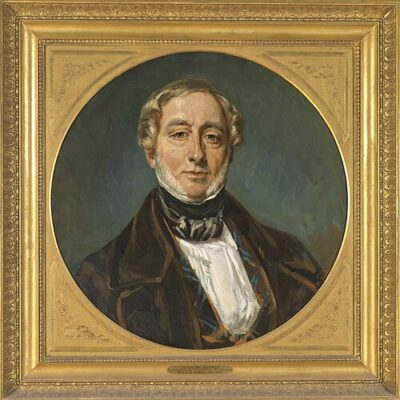
Charles Xavier Thomas
Charles Xavier Thomas was a French computer pioneer. Born May 5, 1785, in Colmar. Died March 12, 1870, in Paris.
Facts
12 facts · 2 confirmed by two sources · 8 cited · 1 from one source · 1 where the sources disagree
What’s different
- Buried in: we show Père Lachaise Cemetery (Sources disagree). Wikidata also lists Grave of Colmar
Where this comes from
Papalocal keeps its own record. It started from these sources; what each one said is kept here as it was copied, so a change on their side never changes this page by itself. Tap one to read its version.
What Wikidata says · copied November 18, 2026 · revision 2571612362
- Described as
- French computer pioneer (1785-1870)
- Other names
- Charles Xavier Thomas de Colmar
- Born
- May 5, 1785 · 1 reference
- Died
- March 12, 1870
- Born in
- Colmar · 2 references
- Died in
- Paris · 1 reference
- Buried in
- Père Lachaise Cemetery; Grave of Colmar
- Citizen of
- France · 3 references
- Occupation
- inventor · 1 reference; entrepreneur · 1 reference; patent inventor · 1 reference; mathematician · 1 reference; engineer; mechanic · 1 reference
- Wikipedias with a page
- 21
Wikidata item Q1066523 (wikidata.org/wiki/Q1066523), public domain (CC0). Copied November 18, 2026.
What Wikipedia says · copied November 18, 2026 · revision 1371980467
Charles Xavier Thomas de Colmar (May 5, 1785–March 12, 1870) was a French inventor and entrepreneur best known for designing, patenting, and manufacturing the first commercially successful mechanical calculator, known as the Arithmometer. Additionally, he founded the insurance companies Le Soleil and L'aigle, which, under his leadership, became the number one insurance group in France during the early years of the Second Empire.
- Born, in its opening lines
- May 5, 1785
- Died, in its opening lines
- March 12, 1870
From the Wikipedia article “Charles Xavier Thomas” (en.wikipedia.org/wiki/Charles_Xavier_Thomas), by its contributors, under CC BY-SA 4.0 (creativecommons.org/licenses/by-sa/4.0/). Copied November 18, 2026; not changed.
Confirmed Two sources agree. Cited One source, and it names where it got it. One source One source, without a reference of its own. Sources disagree The sources disagree. We show the best-supported value and keep theirs below.
