
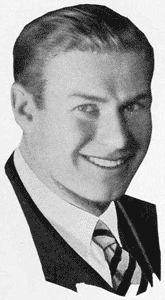
Charley Paddock
Charley Paddock was an American athlete and Olympic gold medalist. Born August 11, 1900, in Gainesville. Died July 21, 1943, in Sitka. Educated at University of Southern California and Pasadena High School.
Facts
16 facts · 0 confirmed by two sources · 5 cited · 11 from one source
Where this comes from
Papalocal keeps its own record. It started from these sources; what each one said is kept here as it was copied, so a change on their side never changes this page by itself. Tap one to read its version.
What Wikidata says · copied November 15, 2026 · revision 2557838061
- Described as
- American athlete and Olympic gold medalist (1900-1943)
- Other names
- Charles William Paddock
- Born
- August 11, 1900 · 5 references
- Died
- July 21, 1943 · 4 references
- Born in
- Gainesville · 1 reference
- Died in
- Sitka · 1 reference
- Buried in
- Sitka National Cemetery
- Citizen of
- United States
- Occupation
- actor; sprinter; athletics competitor; film actor; athlete · 1 reference
- Education
- University of Southern California; Pasadena High School · 1 reference; Polytechnic School
- Sport
- athletics
- Height
- 1.72 m (5 ft 8 in)
- Wikipedias with a page
- 29
Wikidata item Q347256 (wikidata.org/wiki/Q347256), public domain (CC0). Copied November 15, 2026.
What Wikipedia says · copied November 15, 2026 · revision 1381227113
Charles William Paddock was an American track star who competed for the University of Southern California and was a two-time Olympic sprinting champion. In his professional career, he was a nationally-known sports journalist and eventually managed a string of newspapers. In 1981, he was portrayed in the award-winning film about the 1924 games, Chariots of Fire.
From the Wikipedia article “Charley Paddock” (en.wikipedia.org/wiki/Charley_Paddock), by its contributors, under CC BY-SA 4.0 (creativecommons.org/licenses/by-sa/4.0/). Copied November 15, 2026; not changed.
Confirmed Two sources agree. Cited One source, and it names where it got it. One source One source, without a reference of its own. Sources disagree The sources disagree. We show the best-supported value and keep theirs below.
