
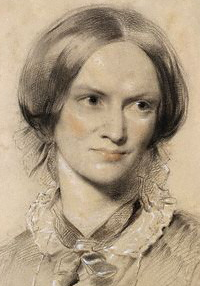
Charlotte Brontë
Charlotte Brontë was a British novelist and poet. Born April 21, 1816, in Thornton. Died March 31, 1855, in Haworth. Known for Jane Eyre, Villette and Shirley. Educated at Pensionnat de Demoiselles.
Facts
37 facts · 2 confirmed by two sources · 19 cited · 16 from one source
Where this comes from
Papalocal keeps its own record. It started from these sources; what each one said is kept here as it was copied, so a change on their side never changes this page by itself. Tap one to read its version.
What Wikidata says · copied November 16, 2026 · revision 2565936810
- Described as
- British novelist and poet (1816-1855)
- Other names
- Douro, Florian Wellesley, Sharlotta Bronte, Charles Wellesley, Lord Charles Albert, Captain Tree, Tree, Karlotta Bronte, Charlotte Bronte, Mrs. A. B. Nicholls, Mrs. Arthur Bell NichollsMrs. Arthur Bell Nicholls, Currer Bell
- Born
- April 21, 1816 · 15 references
- Died
- March 31, 1855 · 15 references
- Born in
- Thornton · 1 reference
- Died in
- Haworth · 1 reference
- Buried in
- St Michael and All Angels' Church, Haworth
- Cause of death
- hyperemesis gravidarum · 1 reference
- Citizen of
- United Kingdom of Great Britain and Ireland
- Occupation
- poet · 1 reference; novelist · 2 references; writer · 2 references; governess · 1 reference; teacher (1842–1844) · 1 reference
- Worked for
- Pensionnat de Demoiselles (1843–1844)
- Education
- Pensionnat de Demoiselles (1842)
- Member of
- Brontë sisters; Acton Currer Bell
- Genre
- Gothic novel; Victorian literature
- Known for
- Jane Eyre; Villette; Shirley · 1 reference; The Professor · 1 reference; Poems by Currer, Ellis, and Acton Bell · 1 reference
- Field
- poetry · 1 reference; fiction · 1 reference; Gothic novel
- Spouse
- Arthur Bell Nicholls (1854–1855) · 1 reference
- Father
- Patrick Brontë · 1 reference
- Mother
- Maria Branwell · 1 reference
- Siblings
- Emily Brontë · 1 reference; Anne Brontë · 1 reference; Elizabeth Brontë · 1 reference; Maria Brontë · 1 reference; Branwell Brontë · 1 reference
- Religion
- Anglicanism · 1 reference
- Lived in
- Haworth (1820–1855); Brussels (1842–1844) · 1 reference
- Wikipedias with a page
- 135
Wikidata item Q127332 (wikidata.org/wiki/Q127332), public domain (CC0). Copied November 16, 2026.
What Wikipedia says · copied November 16, 2026 · revision 1382106766
Charlotte Nicholls (21 April 1816 – 31 March 1855), commonly known by her maiden name Charlotte Brontë (, commonly ), was an English novelist and poet, and was the elder sister of Emily, Anne and Branwell Brontë. She is best known for her novel Jane Eyre, which was first published under the pseudonym Currer Bell. Jane Eyre was a great success on publication, and has since been acknowledged as a classic of English literature.
Charlotte was the third of six siblings born to Maria Branwell and Patrick Brontë. Maria died when Charlotte was only five years old, and three years later, Charlotte was sent to the Clergy Daughters' School at Cowan Bridge in Lancashire, along with her three sisters, Maria, Elizabeth and Emily. Conditions at the school were appalling, with frequent outbreaks of disease. Charlotte's two elder sisters fell ill there and died shortly afterwards; Charlotte attributed her own lifelong ill-health to her time at Cowan Bridge, and later used it as the model for Lowood School in Jane Eyre.
In 1831, Charlotte became a pupil at Roe Head School in Mirfield, but left the following year to teach her sisters, Emily and Anne, at home. In 1835, Charlotte returned to Roe Head as a teacher. In 1839, she accepted a job as governess to a local family, but left after a few months. In 1842, Charlotte joined the Heger Pensionnat, a girls' boarding school in Brussels, as a student, then later as a teacher, in the hope of acquiring the skills required to open a school of her own. However, she was obliged to leave after falling in love with the school's director, Constantin Heger, a married man, who inspired both the character of Rochester in Jane Eyre, and Charlotte's first novel, The Professor.
Charlotte, Emily and Anne attempted to open a school in Haworth, but failed to attract pupils. In 1846 the sisters published a collection of poems under the pseudonyms Currer, Ellis, and Acton Bell. Although Charlotte's first novel, The Professor, was rejected by publishers, her second novel, Jane Eyre, was published in 1847, attracting both praise and controversy. The sisters' true identities were revealed in 1848, and by the following year Charlotte was known in London literary circles. In 1854, Charlotte married Arthur Bell Nicholls, her father's curate. She became pregnant shortly after her wedding in June 1854, but died on 31 March 1855, possibly of tuberculosis, although there is evidence that she may have died from hyperemesis gravidarum, a complication of pregnancy.
- Born, in its opening lines
- April 21, 1816
- Died, in its opening lines
- March 31, 1855
From the Wikipedia article “Charlotte Brontë” (en.wikipedia.org/wiki/Charlotte_Brontë), by its contributors, under CC BY-SA 4.0 (creativecommons.org/licenses/by-sa/4.0/). Copied November 16, 2026; not changed.
Confirmed Two sources agree. Cited One source, and it names where it got it. One source One source, without a reference of its own. Sources disagree The sources disagree. We show the best-supported value and keep theirs below.
