
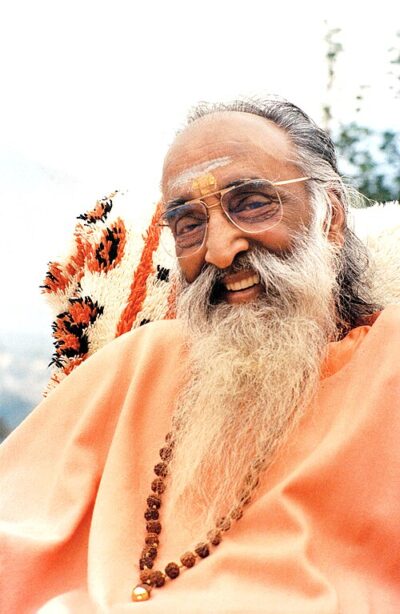
Chinmayananda Saraswati
Chinmayananda Saraswati was an Indian Hindu spiritual teacher. Born May 8, 1916, in Kerala. Died August 3, 1993, in San Diego. Educated at St. Thomas College, Thrissur and University of Lucknow.
Facts
15 facts · 2 confirmed by two sources · 0 cited · 13 from one source
Where this comes from
Papalocal keeps its own record. It started from these sources; what each one said is kept here as it was copied, so a change on their side never changes this page by itself. Tap one to read its version.
What Wikidata says · copied November 18, 2026 · revision 2564400573
- Described as
- Indian Hindu spiritual teacher (1916-1993)
- Other names
- Balakrishna Menon
- Born
- May 8, 1916 · 2 references
- Died
- August 3, 1993 · 2 references
- Born in
- Kerala
- Died in
- San Diego
- Citizen of
- India (1950–); British Raj (–1947); Dominion of India (1947–1950)
- Occupation
- guru
- Education
- St. Thomas College, Thrissur; University of Lucknow; University of Madras; Sree Rama Varma Higher Secondary School; Maharaja's College; Vivekodayam Boys Higher Secondary School
- Religion
- Hinduism
- Wikipedias with a page
- 24
Wikidata item Q173273 (wikidata.org/wiki/Q173273), public domain (CC0). Copied November 18, 2026.
What Wikipedia says · copied November 18, 2026 · revision 1385966990
Swami Chinmayananda Saraswati (IAST: Svāmī Cinmayānanda Sarasvatī), also known as Pujya Gurudev Swami Chinmayananda Saraswati (born Balakrishna Menon; 8 May 1916 – 3 August 1993), was a Hindu spiritual leader and teacher. In 1953, he founded Chinmaya Mission, a worldwide nonprofit organisation, in order to spread the knowledge of Advaita Vedanta as well as the Bhagavad Gita, the Upanishads, and other ancient Hindu scriptures. Through the Mission, Swami Chinmayananda spearheaded a global Hindu spiritual and cultural renaissance that popularised these spiritual texts and values to English speaking audiences across India and globally.
Swami Chinmayananda was originally a journalist and participated in the Indian independence movement. Under the tutelage of Swami Sivananda and later Tapovan Maharaj, he began studying Vedanta and took the vow of sannyasa. He gave his first jñāna yajña, or lecture series about Hindu spirituality, in 1951, starting the work of the Mission. Today, Chinmaya Mission encompasses more than 300 centres in India and internationally and conducts educational, spiritual, and charitable activities.
Swami Chinmayananda's approach was characterised by an appeal to the English-educated Indian middle class and Indian diaspora; he gave lectures and published books in English. Swami Chinmayananda also helped found the Vishva Hindu Parishad (VHP), an Indian right-wing Hindu organisation that is considered a member of the Sangh Parivar. In 1964, he convened delegates to create the VHP at Sandeepany ashram and served as the organisation's first president. He aimed to "awake(n) the Hindus and to make them conscious of their proud place in the comity of nations," saying that, "Let us convert Hindus to Hinduism, then everything will be all right."
Swami Chinmayananda authored 95 publications, including commentaries on the major Upanishads and Bhagavad Gita. He was a visiting professor of Indian philosophy at several American and Asian universities, and he conducted university lecture tours in many countries.
- Born, in its opening lines
- May 8, 1916
- Died, in its opening lines
- August 3, 1993
From the Wikipedia article “Chinmayananda Saraswati” (en.wikipedia.org/wiki/Chinmayananda_Saraswati), by its contributors, under CC BY-SA 4.0 (creativecommons.org/licenses/by-sa/4.0/). Copied November 18, 2026; not changed.
Confirmed Two sources agree. Cited One source, and it names where it got it. One source One source, without a reference of its own. Sources disagree The sources disagree. We show the best-supported value and keep theirs below.
