
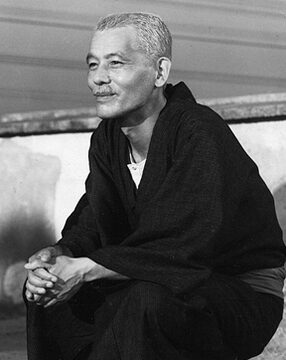
Chishū Ryū
Chishū Ryū was a Japanese actor. Born May 13, 1904, in Tamana. Died March 16, 1993, in Yokohama. Educated at Toyo University. Awards include Kikuchi Kan Prize, Medal with Purple Ribbon and Blue Ribbon Awards for Best Supporting Actor.
Facts
15 facts · 2 confirmed by two sources · 3 cited · 10 from one source
Where this comes from
Papalocal keeps its own record. It started from these sources; what each one said is kept here as it was copied, so a change on their side never changes this page by itself. Tap one to read its version.
What Wikidata says · copied November 18, 2026 · revision 2540304230
- Described as
- Japanese actor (1904–1993)
- Other names
- Chishu Ryu, Ryu Chishu, Ryū Chishū, Chishuu Ryuu
- Born
- May 13, 1904 · 3 references
- Died
- March 16, 1993 · 3 references
- Born in
- Tamana
- Died in
- Yokohama · 1 reference
- Citizen of
- Japan; Empire of Japan (–1947)
- Occupation
- actor · 2 references; film actor · 1 reference; television actor
- Education
- Toyo University
- Awards
- Kikuchi Kan Prize (1987); Medal with Purple Ribbon (1967); Blue Ribbon Awards for Best Supporting Actor (1952); Golden Arrow Award; Mainichi Film Award for Best Actor
- Wikipedias with a page
- 21
Wikidata item Q958714 (wikidata.org/wiki/Q958714), public domain (CC0). Copied November 18, 2026.
What Wikipedia says · copied November 18, 2026 · revision 1377201231
Chishū Ryū (笠 智衆, Ryū Chishū; May 13, 1904 – March 16, 1993) was a Japanese actor, whose career spanned 65 years and over 230 film and television productions. He was best known for his collaborations with director Yasujirō Ozu, whom he worked with on at least 32 films.
- Born, in its opening lines
- May 13, 1904
- Died, in its opening lines
- March 16, 1993
From the Wikipedia article “Chishū Ryū” (en.wikipedia.org/wiki/Chishū_Ryū), by its contributors, under CC BY-SA 4.0 (creativecommons.org/licenses/by-sa/4.0/). Copied November 18, 2026; not changed.
Confirmed Two sources agree. Cited One source, and it names where it got it. One source One source, without a reference of its own. Sources disagree The sources disagree. We show the best-supported value and keep theirs below.
