
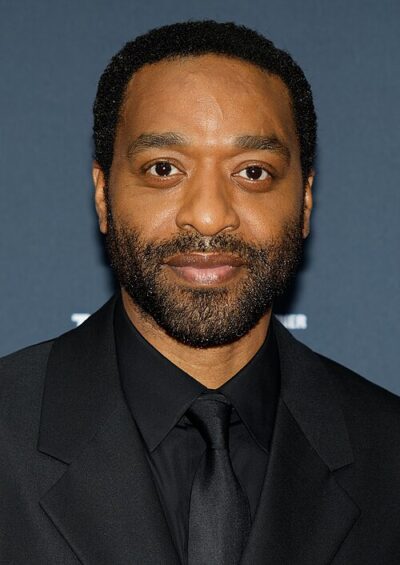
Chiwetel Ejiofor
Chiwetel Ejiofor is a British actor. Born July 10, 1977, in Forest Gate. Known for 12 Years a Slave, 2012 and Doctor Strange. Educated at Dulwich College and London Academy of Music and Dramatic Art. Awards include Laurence Olivier Awards, Indiana Film Journalists Association Award for Best Actor and Officer of the Order of the British Empire.
Facts
34 facts · 1 confirmed by two sources · 3 cited · 30 from one source
Where this comes from
Papalocal keeps its own record. It started from these sources; what each one said is kept here as it was copied, so a change on their side never changes this page by itself. Tap one to read its version.
What Wikidata says · copied November 16, 2026 · revision 2559620390
- Described as
- British actor (born 1977)
- Other names
- Chiwetel Umeadi Ejiofor
- Born
- July 10, 1977 · 2 references
- Born in
- Forest Gate
- Citizen of
- United Kingdom; Nigeria
- Occupation
- stage actor; film actor; actor · 2 references; director; screenwriter; television actor; film director; voice actor
- Education
- Dulwich College; London Academy of Music and Dramatic Art · 1 reference; Dulwich Prep & Senior
- Genre
- Shakespearean comedy
- Known for
- 12 Years a Slave (2013); 2012 (2009); Doctor Strange; The Lion King (2019); The Life of Chuck (2025); Backrooms (2026)
- Awards
- Laurence Olivier Awards; Indiana Film Journalists Association Award for Best Actor (2013); Officer of the Order of the British Empire; BAFTA Award for Best Actor in a Leading Role; Commander of the Order of the British Empire
- Field
- video game industry; acting · 1 reference
- Father
- Arinze Ejiofor
- Mother
- Obiajulu Ejiofor
- Siblings
- Zain Asher; Kandi Ejiofor
- Lived in
- London
- Wikipedias with a page
- 63
Wikidata item Q317343 (wikidata.org/wiki/Q317343), public domain (CC0). Copied November 16, 2026.
What Wikipedia says · copied November 16, 2026 · revision 1385106479
Chiwetel Umeadi Ejiofor (born 10 July 1977) is a British actor and director. He is the recipient of various accolades, including a British Academy Film Award and a Laurence Olivier Award, in addition to nominations for an Academy Award, two Primetime Emmy Awards, and five Golden Globe Awards. In 2008, he was appointed an Officer of the Order of the British Empire (OBE), and in 2015, he was advanced to Commander (CBE) for his services to the arts.
After enrolling at the National Youth Theatre in 1995 and attending the London Academy of Music and Dramatic Art, at age 19 and three months into his course, Ejiofor was cast by Steven Spielberg to play a supporting role in the film Amistad (1997) as James Covey. He later won the Laurence Olivier Award for Best Actor for Othello (2008). Ejiofor earned the BAFTA Award for Best Actor as well as a nomination for the Academy Award for Best Actor for his portrayal of Solomon Northup in 12 Years a Slave (2013).
Ejiofor's other films include Dirty Pretty Things (2002), Love Actually (2003), Kinky Boots (2005), Four Brothers (2005), Serenity (2005), Children of Men (2006), Endgame (2009), 2012 (2009), Salt (2010), Savannah (2013), The Martian (2015), Venom: The Last Dance (2024), and Backrooms (2026). He joined the Marvel Cinematic Universe playing Karl Mordo in Doctor Strange (2016) and Doctor Strange in the Multiverse of Madness (2022). He also voiced Scar in The Lion King (2019). He directed, wrote, and starred in the films The Boy Who Harnessed the Wind (2019) and Rob Peace (2024).
On television, he was nominated for a Primetime Emmy Award for Outstanding Lead Actor for his performance as a jazz band leader in the BBC Two miniseries Dancing on the Edge (2014). He also acted in the BBC drama series The Shadow Line (2011), the HBO television film Phil Spector (2013), and the Showtime science fiction series The Man Who Fell to Earth (2022).
- Born, in its opening lines
- July 10, 1977
From the Wikipedia article “Chiwetel Ejiofor” (en.wikipedia.org/wiki/Chiwetel_Ejiofor), by its contributors, under CC BY-SA 4.0 (creativecommons.org/licenses/by-sa/4.0/). Copied November 16, 2026; not changed.
Confirmed Two sources agree. Cited One source, and it names where it got it. One source One source, without a reference of its own. Sources disagree The sources disagree. We show the best-supported value and keep theirs below.
