
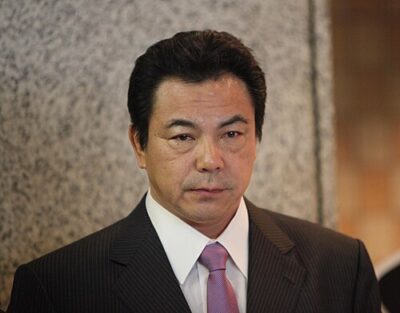
Chiyonofuji Mitsugu
Chiyonofuji Mitsugu was a Japanese sumo wrestler, 58th Yokozuna. Born June 1, 1955, in Hokkaidō. Died July 31, 2016, in Tokyo. Awards include People's Honour Award.
Facts
11 facts · 2 confirmed by two sources · 3 cited · 6 from one source
Where this comes from
Papalocal keeps its own record. It started from these sources; what each one said is kept here as it was copied, so a change on their side never changes this page by itself. Tap one to read its version.
What Wikidata says · copied November 17, 2026 · revision 2552515794
- Described as
- Japanese sumo wrestler, 58th Yokozuna
- Other names
- Chiyonofuji, Akimoto Mitsugu, Kokonoe Mitsugu
- Born
- June 1, 1955 · 1 reference
- Died
- July 31, 2016 · 3 references
- Born in
- Hokkaidō
- Died in
- Tokyo · 1 reference
- Cause of death
- pancreatic cancer · 1 reference
- Name at birth
- 秋元 貢 · 1 reference
- Citizen of
- Japan
- Occupation
- rikishi
- Sport
- sumo
- Awards
- People's Honour Award (1989)
- Children
- Kozue Akimoto
- Wikipedias with a page
- 27
Wikidata item Q311728 (wikidata.org/wiki/Q311728), public domain (CC0). Copied November 17, 2026.
What Wikipedia says · copied November 17, 2026 · revision 1384321039
Chiyonofuji Mitsugu (Japanese: 千代の富士 貢; June 1, 1955 – July 31, 2016), born Mitsugu Akimoto (秋元 貢, Akimoto Mitsugu), was a Japanese professional sumo wrestler and the 58th yokozuna of the sport.
Chiyonofuji is considered one of the greatest yokozunas in sumo's history, winning 31 tournament championships (yūshō) at the top division (makuuchi). This was second only to Taihō at the time of Chiyonofuji's retirement. He was particularly remarkable for his longevity in sumo's top rank, which he held for a period of ten years from 1981 to 1991. Promoted at the age of twenty-six after winning his second championship, his performance improved with age, winning more tournaments in his thirties than any other wrestler and dominating the sport in the second half of the 1980s. He finally retired in May 1991, just short of his thirty-sixth birthday. Following his retirement as a wrestler, he became an elder (oyakata) of the Japan Sumo Association and became the Kokonoe-oyakata the following year in 1992, serving as the stable master of Kokonoe stable until his death.
During his 21-year professional career, Chiyonofuji set records for most career victories (1045) and most wins in the top makuuchi division (807), earning an entry in the Guinness World Records, although both of these records were later broken by Kaiō. He won the November Kyushu tournament, one of the six annual honbasho, a record eight consecutive years from 1981 until 1988, and also set the record for the longest postwar run of consecutive wins (53 bouts in 1988). That record stood for 22 years until Hakuhō broke it with his 54th straight win in September 2010.
In a sport where weight is often regarded as vital, Chiyonofuji was comparatively light at around 120 kg (260 lb), making him the lightest yokozuna since Tochinoumi during the 1950s and 60s; he primarily relied on his muscle and superior technique to defeat his opponents. Chiyonofuji was a popular sumo wrestler who also went by his nickname "The Wolf" (ウルフ, Urufu) due to his muscular build atypical of most other sumo wrestlers, his competitive ferocity, and his appeal as a sex symbol owing to his body and his masculine facial features.
- Born, in its opening lines
- June 1, 1955
- Died, in its opening lines
- July 31, 2016
From the Wikipedia article “Chiyonofuji Mitsugu” (en.wikipedia.org/wiki/Chiyonofuji_Mitsugu), by its contributors, under CC BY-SA 4.0 (creativecommons.org/licenses/by-sa/4.0/). Copied November 17, 2026; not changed.
Confirmed Two sources agree. Cited One source, and it names where it got it. One source One source, without a reference of its own. Sources disagree The sources disagree. We show the best-supported value and keep theirs below.
