
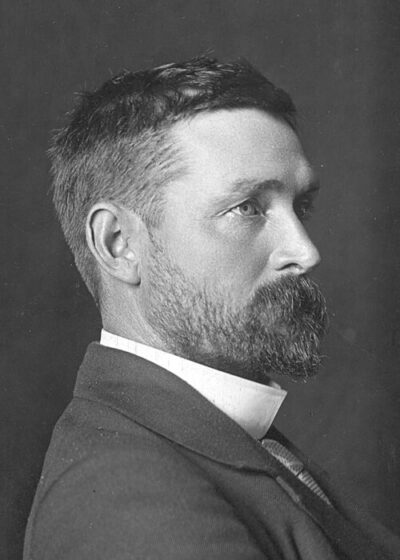
Chris Watson
Chris Watson was an Australian politician, third Prime Minister of Australia. Born April 9, 1867, in Valparaíso. Died November 18, 1941, in Sydney. Positions held include Prime Minister of Australia (1904), member of the Australian House of Representatives (1901–1910) and Member of the New South Wales Legislative Assembly (1894–1901).
Facts
20 facts · 2 confirmed by two sources · 7 cited · 11 from one source
Where this comes from
Papalocal keeps its own record. It started from these sources; what each one said is kept here as it was copied, so a change on their side never changes this page by itself. Tap one to read its version.
What Wikidata says · copied November 16, 2026 · revision 2569720322
- Described as
- Australian politician, third Prime Minister of Australia (1867-1941)
- Other names
- The Honourable John Christian Watson, John Christian Watson, John Christian Tanck
- Born
- April 9, 1867 · 2 references
- Died
- November 18, 1941 · 2 references
- Born in
- Valparaíso · 1 reference
- Died in
- Sydney · 1 reference
- Buried in
- Northern Suburbs Crematorium · 1 reference
- Name at birth
- John Christian Tanck
- Citizen of
- Australia; Chile
- Occupation
- politician · 1 reference; trade unionist; head of government · 1 reference
- Positions held
- Prime Minister of Australia (1904); member of the Australian House of Representatives (1901–1910); Member of the New South Wales Legislative Assembly (1894–1901); Treasurer of Australia (1904)
- Political party
- Australian Labor Party
- Spouse
- Ada Watson
- Father
- Johan Cristian Tanck · 1 reference
- Mother
- Martha Minchin · 1 reference
- Religion
- Unitarianism
- Wikipedias with a page
- 48
Wikidata item Q23347 (wikidata.org/wiki/Q23347), public domain (CC0). Copied November 16, 2026.
What Wikipedia says · copied November 16, 2026 · revision 1385762128
John Christian Watson (born Johan Cristian Tanck; 9 April 1867 – 18 November 1941) was the third prime minister of Australia, serving from April to August 1904. He held office as the inaugural federal leader of the Australian Labor Party (ALP) from 1901 to 1907 and was the first member of the party to serve as prime minister.
Watson was born in Valparaíso, Chile, the son of a German Chilean seaman. He grew up on the South Island of New Zealand, taking the surname of his step-father when his Irish-born mother remarried. He left school at a young age, working in the printing industry as a compositor. Watson moved to Sydney in 1886 and became prominent in the local labour movement. He helped establish the Labor Electoral League of New South Wales and directed the party's campaign at the 1891 general election. Watson was elected to the New South Wales Legislative Assembly at the 1894 election, aged 27, and quickly became a leading figure in the ALP. He and most party members opposed Federation on the grounds that the proposed constitution was undemocratic.
In 1901, Watson was elected to the House of Representatives at the inaugural federal election. He became a founding member of the ALP caucus in federal parliament and was elected as the party's inaugural leader. During the first term of parliament he supported the Liberal Protectionist governments of Edmund Barton and Alfred Deakin, and was a strong supporter of the White Australia policy. At the 1903 election, the ALP secured the balance of power in the House and a strong position in the Senate. Watson formed a minority government in April 1904, aged 37, after the ALP withdrew its support from Deakin. He was one of the first socialists to head a government in a parliamentary system, attracting international attention, and remains Australia's youngest prime minister.
After less than four months in office, the Watson government lost a confidence motion and Watson was succeeded as prime minister by anti-socialist George Reid. He was leader of the opposition until 1905, when he helped reinstall Deakin as prime minister. The ALP continued to offer its support to Deakin after the 1906 election, despite the opposition of some in the party. Watson resigned the party's leadership in 1907, citing family concerns, and left parliament at the 1910 election. He was expelled from the ALP during the 1916 split over conscription and became a Nationalist, although he never again stood for public office. He subsequently had a successful business career, including as president of the NRMA and chairman of Ampol.
While Watson did not succeed in passing legislation while in office, his term as prime minister is seen as significant as a demonstration that the ALP could form a competent government. His successor as party leader Andrew Fisher would lead the ALP to a majority government at the 1910 election, in which many of Watson's ministers played a key role.
- Born, in its opening lines
- April 9, 1867
- Died, in its opening lines
- November 18, 1941
From the Wikipedia article “Chris Watson” (en.wikipedia.org/wiki/Chris_Watson), by its contributors, under CC BY-SA 4.0 (creativecommons.org/licenses/by-sa/4.0/). Copied November 16, 2026; not changed.
Confirmed Two sources agree. Cited One source, and it names where it got it. One source One source, without a reference of its own. Sources disagree The sources disagree. We show the best-supported value and keep theirs below.
