
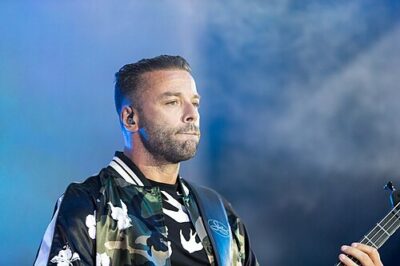
Chris Wolstenholme
Chris Wolstenholme is a British bassist. Born December 2, 1978, in Rotherham. Awards include Honorary Doctor of Arts.
Facts
14 facts · 1 confirmed by two sources · 4 cited · 9 from one source
Where this comes from
Papalocal keeps its own record. It started from these sources; what each one said is kept here as it was copied, so a change on their side never changes this page by itself. Tap one to read its version.
What Wikidata says · copied November 16, 2026 · revision 2548253289
- Described as
- British bassist
- Other names
- Christopher Tony Wolstenholme, Christopher Wolstenholme
- Born
- December 2, 1978 · 1 reference
- Born in
- Rotherham
- Name at birth
- Christopher Tony Wolstenholme
- Citizen of
- United Kingdom
- Occupation
- bassist; musician
- Member of
- Muse
- Genre
- alternative rock; hard rock · 1 reference
- Instrument
- bass guitar; bass instrument · 1 reference; voice · 1 reference
- Awards
- Honorary Doctor of Arts (2008) · 1 reference
- Field
- music
- Wikipedias with a page
- 43
Wikidata item Q1984061 (wikidata.org/wiki/Q1984061), public domain (CC0). Copied November 16, 2026.
What Wikipedia says · copied November 16, 2026 · revision 1384008105
Christopher Tony Wolstenholme (born 2 December 1978) is an English musician. He is the bassist and backing vocalist for the rock band Muse. He combines bass guitar with effects and synthesisers to create overdriven fuzz bass tones, a motif of many Muse songs. He wrote and sang lead vocals from two songs from Muse's sixth album, The 2nd Law (2012). In 2024, Wolstenholme launched a solo project, Chromes.
- Born, in its opening lines
- December 2, 1978
From the Wikipedia article “Chris Wolstenholme” (en.wikipedia.org/wiki/Chris_Wolstenholme), by its contributors, under CC BY-SA 4.0 (creativecommons.org/licenses/by-sa/4.0/). Copied November 16, 2026; not changed.
Confirmed Two sources agree. Cited One source, and it names where it got it. One source One source, without a reference of its own. Sources disagree The sources disagree. We show the best-supported value and keep theirs below.
