
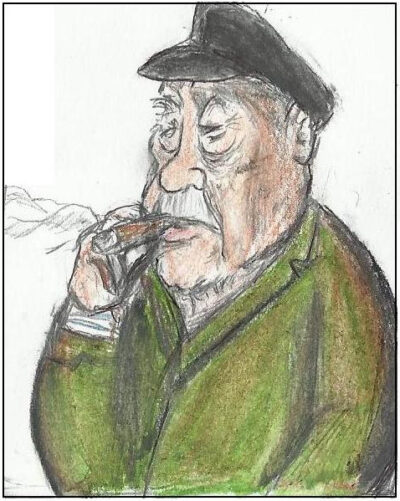
Christian Mortensen
Christian Mortensen was a Danish supercentenarian and second-longest-lived man. Born August 16, 1882, in Denmark. Died April 25, 1998, in San Rafael.
Facts
11 facts · 2 confirmed by two sources · 3 cited · 6 from one source
Where this comes from
Papalocal keeps its own record. It started from these sources; what each one said is kept here as it was copied, so a change on their side never changes this page by itself. Tap one to read its version.
What Wikidata says · copied November 15, 2026 · revision 2557403571
- Described as
- Danish supercentenarian and second-longest-lived man (1882–1998)
- Other names
- Thomas Peter Thorvald Kristian Ferdinand Mortensen
- Born
- August 16, 1882
- Died
- April 25, 1998
- Born in
- Denmark
- Died in
- San Rafael
- Cause of death
- Alzheimer's disease
- Citizen of
- United States; Kingdom of Denmark
- Occupation
- tailor; cowboy · 1 reference; boat builder · 1 reference; milk deliverer · 1 reference
- Wikipedias with a page
- 25
Wikidata item Q363046 (wikidata.org/wiki/Q363046), public domain (CC0). Copied November 15, 2026.
What Wikipedia says · copied November 15, 2026 · revision 1365375794
Thomas Peter Thorvald Kristian Ferdinand Mortensen (August 16, 1882 – April 25, 1998), known as Christian Mortensen, was a Danish-American supercentenarian who resided in California. When he died, his age of 115 years and 252 days was the longest verified male lifespan at the time, until Jiroemon Kimura surpassed him in 2012. Mortensen was baptized in Fruering Church on December 26, 1882. Besides his baptismal record, other records include the 1890 and 1901 census enumerations in Denmark, and church confirmation in 1896.
- Born, in its opening lines
- August 16, 1882
- Died, in its opening lines
- April 25, 1998
From the Wikipedia article “Christian Mortensen” (en.wikipedia.org/wiki/Christian_Mortensen), by its contributors, under CC BY-SA 4.0 (creativecommons.org/licenses/by-sa/4.0/). Copied November 15, 2026; not changed.
Confirmed Two sources agree. Cited One source, and it names where it got it. One source One source, without a reference of its own. Sources disagree The sources disagree. We show the best-supported value and keep theirs below.
