
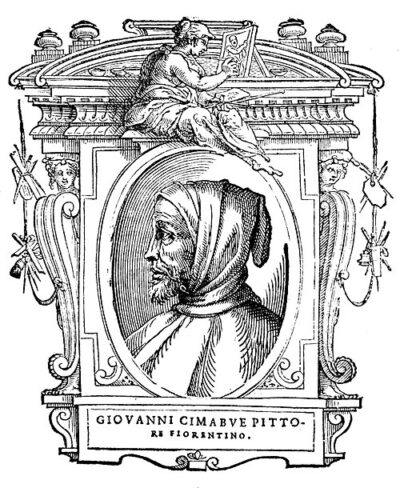
Cimabue
Cimabue was an Italian artist. Born 1240, in Florence. Died 1302, in Pisa. Known for Madonna and Child Enthroned with Angels and Prophets. ˋSanta Trinità Maestà´, Maestà di Santa Maria dei Servi and Saint Francis.
Facts
12 facts · 2 confirmed by two sources · 3 cited · 7 from one source
Where this comes from
Papalocal keeps its own record. It started from these sources; what each one said is kept here as it was copied, so a change on their side never changes this page by itself. Tap one to read its version.
What Wikidata says · copied November 16, 2026 · revision 2568932121
- Described as
- Italian artist (1240–1302)
- Other names
- Cenni Di Pepo, giovanni cimabue, Cenni di Pepe, Ciambu, Cenni di Peppo, Benvenuto de Giuseppe, Cenni de Pepo Cimabue, Benciviene di Pepo, Cenni Di Pepi, Cenni di Pepo, Jean Cimabué, Jean Cimabue
- Born
- 1240 · 9 references
- Died
- 1302 · 10 references
- Born in
- Florence · 1 reference
- Died in
- Pisa · 1 reference
- Citizen of
- Republic of Florence
- Occupation
- painter · 4 references
- Known for
- Madonna and Child Enthroned with Angels and Prophets. ˋSanta Trinità Maestà´; Maestà di Santa Maria dei Servi; Saint Francis
- Field
- painting · 2 references; mosaic; fresco painting
- Wikipedias with a page
- 61
Wikidata item Q15790 (wikidata.org/wiki/Q15790), public domain (CC0). Copied November 16, 2026.
What Wikipedia says · copied November 16, 2026 · revision 1381302397
Giovanni Cimabue ( CHEE-mə-BOO-ay, Italian: [tʃimaˈbuːe]; c. 1240 – 1302), also known as Cenni di Pepo or Cenni di Pepi, was an Italian painter and designer of mosaics from Florence.
Although heavily influenced by Byzantine models, Cimabue is generally regarded as one of the first great Italian painters to break from the Italo-Byzantine style. Compared with the norms of medieval art, his works have more lifelike figural proportions and a more sophisticated use of shading to suggest volume. According to Italian painter and historian Giorgio Vasari, Cimabue was the teacher of Giotto, the first great artist of the Italian Proto-Renaissance. However, many scholars today tend to discount Vasari's claim by citing earlier sources that suggest otherwise.
- Born, in its opening lines
- 1240
- Died, in its opening lines
- 1302
From the Wikipedia article “Cimabue” (en.wikipedia.org/wiki/Cimabue), by its contributors, under CC BY-SA 4.0 (creativecommons.org/licenses/by-sa/4.0/). Copied November 16, 2026; not changed.
Confirmed Two sources agree. Cited One source, and it names where it got it. One source One source, without a reference of its own. Sources disagree The sources disagree. We show the best-supported value and keep theirs below.
