
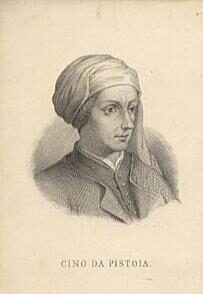
Cino da Pistoia
Cino da Pistoia was an Italian Renaissance jurist and poet. Born 1270, in Pistoia. Died 1336, in Pistoia. Known for Rime, Lectura super Codicem and Lectura super Digesto veteri. Educated at University of Bologna.
Facts
18 facts · 2 confirmed by two sources · 3 cited · 13 from one source
Where this comes from
Papalocal keeps its own record. It started from these sources; what each one said is kept here as it was copied, so a change on their side never changes this page by itself. Tap one to read its version.
What Wikidata says · copied November 16, 2026 · revision 2564370685
- Described as
- Italian Renaissance jurist and poet (1270–1336)
- Other names
- Guittoncino di Francesco dei Sigisbuldi
- Born
- 1270 · 7 references
- Died
- 1336 · 6 references
- Born in
- Pistoia · 1 reference
- Died in
- Pistoia · 1 reference
- Buried in
- Pistoia Cathedral
- Name at birth
- Guittoncino di Francesco dei Sigisbuldi
- Occupation
- poet lawyer; counsel; university teacher; poet · 1 reference
- Worked for
- University of Bologna; University of Florence · 1 reference; University of Siena · 1 reference; University of Perugia · 1 reference
- Education
- University of Bologna
- Known for
- Rime; Lectura super Codicem; Lectura super Digesto veteri
- Wikipedias with a page
- 29
Wikidata item Q736348 (wikidata.org/wiki/Q736348), public domain (CC0). Copied November 16, 2026.
What Wikipedia says · copied November 16, 2026 · revision 1385563230
Cino da Pistoia (1270 – 1336) was an Italian jurist and poet. He was the university teacher of Bartolus de Saxoferrato and a friend and intellectual influence on Dante Alighieri.
- Born, in its opening lines
- 1270
- Died, in its opening lines
- 1336
From the Wikipedia article “Cino da Pistoia” (en.wikipedia.org/wiki/Cino_da_Pistoia), by its contributors, under CC BY-SA 4.0 (creativecommons.org/licenses/by-sa/4.0/). Copied November 16, 2026; not changed.
Confirmed Two sources agree. Cited One source, and it names where it got it. One source One source, without a reference of its own. Sources disagree The sources disagree. We show the best-supported value and keep theirs below.
