
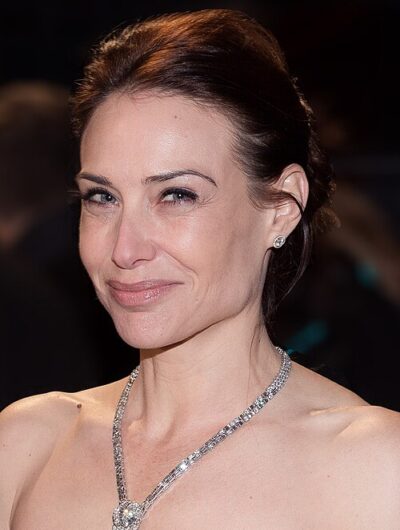
Claire Forlani
Claire Forlani is a British actress. Born December 17, 1971, in Twickenham. Educated at Arts Educational Schools.
Facts
8 facts · 1 confirmed by two sources · 2 cited · 5 from one source
Where this comes from
Papalocal keeps its own record. It started from these sources; what each one said is kept here as it was copied, so a change on their side never changes this page by itself. Tap one to read its version.
What Wikidata says · copied November 16, 2026 · revision 2562740110
- Described as
- British actress
- Other names
- Claire Antonia Forlani, Clair Forlani
- Born
- December 17, 1971 · 2 references
- Born in
- Twickenham · 3 references
- Citizen of
- United Kingdom
- Occupation
- actor · 2 references; film actor; stage actor
- Education
- Arts Educational Schools
- Spouse
- Dougray Scott (2007–)
- Wikipedias with a page
- 46
Wikidata item Q40228 (wikidata.org/wiki/Q40228), public domain (CC0). Copied November 16, 2026.
What Wikipedia says · copied November 16, 2026 · revision 1375284691
Claire Antonia Forlani (born December 17, 1971) is an English actress. She became known in the mid-1990s for her leading role in the film Mallrats, and in the Jean-Michel Basquiat 1996 biopic Basquiat. In 1998, she achieved wide recognition for starring in the fantasy romance film Meet Joe Black. Her other notable films include Mystery Men (1999), Boys and Girls (2000), Antitrust (2001), The Medallion (2003), and In the Name of the King (2007). She appeared in numerous TV films and series, including a starring role on the historical-fantasy-drama series Camelot, and recurring roles on the CBS action series CSI: NY, NCIS: Los Angeles, and Hawaii Five-0. She played the role of Meredith Newman in the 2019 film Five Feet Apart.
- Born, in its opening lines
- December 17, 1971
From the Wikipedia article “Claire Forlani” (en.wikipedia.org/wiki/Claire_Forlani), by its contributors, under CC BY-SA 4.0 (creativecommons.org/licenses/by-sa/4.0/). Copied November 16, 2026; not changed.
Confirmed Two sources agree. Cited One source, and it names where it got it. One source One source, without a reference of its own. Sources disagree The sources disagree. We show the best-supported value and keep theirs below.
