
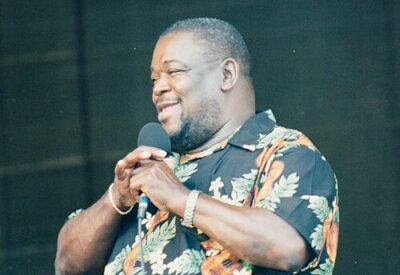
Clarence "Frogman" Henry
Clarence "Frogman" Henry was an American rhythm and blues singer and pianist. Born March 19, 1937, in New Orleans. Died April 7, 2024.
Facts
20 facts · 2 confirmed by two sources · 14 cited · 4 from one source
Where this comes from
Papalocal keeps its own record. It started from these sources; what each one said is kept here as it was copied, so a change on their side never changes this page by itself. Tap one to read its version.
What Wikidata says · copied November 19, 2026 · revision 2566999420
- Described as
- American rhythm and blues singer and pianist (1937–2024)
- Other names
- Clarence Henry, Frogman, Frogman Henry, "Frogman" Henry
- Born
- March 19, 1937 · 1 reference
- Died
- April 7, 2024 · 2 references
- Born in
- New Orleans · 1 reference
- Buried in
- McDonoghville Cemetery · 1 reference
- Citizen of
- United States · 1 reference
- Occupation
- singer · 1 reference; jazz musician · 1 reference; pianist · 1 reference
- Member of
- American Federation of Musicians. Local 496 (New Orleans, La.) · 1 reference
- Genre
- rhythm and blues; jazz · 1 reference
- Instrument
- piano · 1 reference; voice
- Record label
- Argo Records; Cadet Records
- Field
- music · 1 reference; singing · 1 reference; blues · 1 reference; piano performance · 1 reference
- Nickname
- Frogman · 1 reference
- Wikipedias with a page
- 13
Wikidata item Q1095442 (wikidata.org/wiki/Q1095442), public domain (CC0). Copied November 19, 2026.
What Wikipedia says · copied November 19, 2026 · revision 1312627173
Clarence Henry II (March 19, 1937 – April 7, 2024), known as Clarence "Frogman" Henry, was an American rhythm and blues singer and pianist, best known for his hits "Ain't Got No Home" (1956) and "(I Don't Know Why) But I Do" (1961).
- Born, in its opening lines
- March 19, 1937
- Died, in its opening lines
- April 7, 2024
From the Wikipedia article “Clarence "Frogman" Henry” (en.wikipedia.org/wiki/Clarence_"Frogman"_Henry), by its contributors, under CC BY-SA 4.0 (creativecommons.org/licenses/by-sa/4.0/). Copied November 19, 2026; not changed.
Confirmed Two sources agree. Cited One source, and it names where it got it. One source One source, without a reference of its own. Sources disagree The sources disagree. We show the best-supported value and keep theirs below.
