
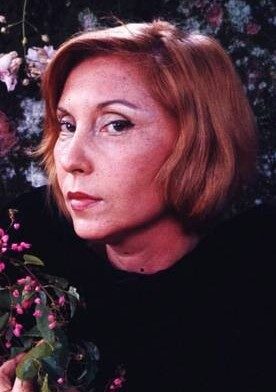
Clarice Lispector
Clarice Lispector was an Ukrainian-Brazilian writer, poet, and journalist. Born December 10, 1920, in Chechelnyk. Died December 9, 1977, in Rio de Janeiro. Known for The Hour of the Star, The Passion According to G.H. and Family Ties. Educated at Federal University of Rio de Janeiro Faculty of Law. Awards include Prêmio Jabuti (2 times) and Order of Cultural Merit (Brazil).
Facts
35 facts · 2 confirmed by two sources · 15 cited · 18 from one source
Where this comes from
Papalocal keeps its own record. It started from these sources; what each one said is kept here as it was copied, so a change on their side never changes this page by itself. Tap one to read its version.
What Wikidata says · copied November 16, 2026 · revision 2568762550
- Described as
- Ukrainian-Brazilian writer, poet, and journalist (1920–1977)
- Other names
- Helen Palmer, Teresa Quadros, Хая Пинхасiвна Лиспектор
- Born
- December 10, 1920 · 9 references
- Died
- December 9, 1977 · 10 references
- Born in
- Chechelnyk
- Died in
- Rio de Janeiro · 2 references
- Cause of death
- ovarian cancer · 1 reference
- Citizen of
- Ukrainian Soviet Socialist Republic; Brazil (1943–) · 1 reference
- Occupation
- screenwriter · 1 reference; translator · 2 references; journalist · 1 reference; novelist; painter; writer · 3 references; children's writer · 1 reference
- Education
- Federal University of Rio de Janeiro Faculty of Law
- Known for
- The Hour of the Star · 1 reference; The Passion According to G.H. · 1 reference; Family Ties · 1 reference; Near to the Wild Heart · 1 reference; Água Viva · 1 reference
- Awards
- Prêmio Jabuti (2 times) (1961, 1978) · 1 reference; Order of Cultural Merit (Brazil) (2011) · 1 reference
- Field
- literature · 1 reference; literary activity · 1 reference; journalism · 1 reference
- Spouse
- Maury Gurgel Valente (1943–1959) · 1 reference
- Children
- Paulo Gurgel Valente · 1 reference
- Siblings
- Elisa Lispector · 1 reference
- Religion
- Judaism
- Lived in
- Washington, D.C. (1952–1959); Naples (1944–1946); Bern (1946–1949); Rio de Janeiro (2 times) (1935–1977); Recife (1925–1935)
- Website
- http://www.claricelispector.com.br/
- Wikipedias with a page
- 63
Wikidata item Q235955 (wikidata.org/wiki/Q235955), public domain (CC0). Copied November 16, 2026.
What Wikipedia says · copied November 16, 2026 · revision 1381797392
Clarice Lispector (Portuguese: [klaˈɾisi lisˈpɛktoʁ]; née Chaya Pinkhasivna Lispector; December 10, 1920 – December 9, 1977) was a Ukrainian-born Brazilian novelist and short story writer. Her distinctive and innovative works, which explore diverse narrative forms and themes of intimacy and introspection, have earned her international acclaim. She is known for works such as Near to the Wild Heart (1943) and The Hour of the Star (1977).
Clarice arrived in Brazil before she turned two years old, with her family, amidst the pogroms that followed the collapse of the Russian Empire. Born to a Jewish family in Podolia in Western Ukraine, she grew up in Recife, the capital of the northeastern state of Pernambuco, where her mother died when Clarice was nine. The family moved to Rio de Janeiro when she was in her teens. While in law school in Rio, she began publishing her first journalistic work and short stories, catapulting to fame at the age of 23 with the publication of her first novel, Near to the Wild Heart (Perto do Coração Selvagem), written as an interior monologue in a style and language that was considered revolutionary in Brazil.
In 1944, Lispector spent the next decade and a half in Europe and the United States due to her marriage to a Brazilian diplomat. After returning to Rio de Janeiro in 1959, she published the stories of Family Ties (Laços de Família) and the novel The Passion According to G.H. (A Paixão Segundo G.H.). Injured in an accident in 1966, she spent the last decade of her life in frequent pain, steadily writing and publishing novels and stories, including the celebrated Água Viva, until her premature death in 1977.
Lispector has been the subject of numerous books, and references to her and her work are common in Brazilian literature and music. Several of her works have been turned into films. In 2009, the American writer Benjamin Moser published Why This World: A Biography of Clarice Lispector. Since that publication, her works have been the object of an extensive project of retranslation, published by New Directions Publishing and Penguin Modern Classics, the first Brazilian to enter that prestigious series. Moser, who is also the editor of her anthology The Complete Stories (2015), describes Lispector as the most important Jewish writer in the world since Franz Kafka.
- Born, in its opening lines
- December 10, 1920
- Died, in its opening lines
- December 9, 1977
From the Wikipedia article “Clarice Lispector” (en.wikipedia.org/wiki/Clarice_Lispector), by its contributors, under CC BY-SA 4.0 (creativecommons.org/licenses/by-sa/4.0/). Copied November 16, 2026; not changed.
Confirmed Two sources agree. Cited One source, and it names where it got it. One source One source, without a reference of its own. Sources disagree The sources disagree. We show the best-supported value and keep theirs below.
