
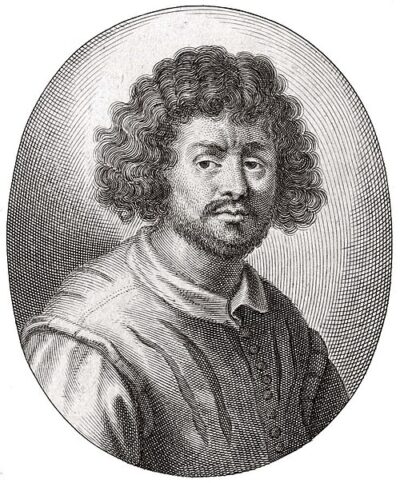
Claude Lorrain
Claude Lorrain was a French painter, draughtsman and etcher. Born 1600, in Chamagne. Died November 23, 1682, in Rome. Known for Village Fête, Seaport with the Embarkation of Saint Ursula and Landscape with the Finding of Moses.
Facts
17 facts · 2 confirmed by two sources · 4 cited · 11 from one source
Where this comes from
Papalocal keeps its own record. It started from these sources; what each one said is kept here as it was copied, so a change on their side never changes this page by itself. Tap one to read its version.
What Wikidata says · copied November 16, 2026 · revision 2563203008
- Described as
- French painter, draughtsman and etcher (1600–1682)
- Other names
- Claude, Claude Gellée, Claude Lorraine
- Born
- 1600 · 21 references
- Died
- November 23, 1682 · 11 references
- Born in
- Chamagne · 1 reference
- Died in
- Rome · 2 references
- Buried in
- San Luigi dei Francesi (1840–) · 1 reference; Trinità dei Monti (–1840)
- Citizen of
- Duchy of Lorraine
- Occupation
- painter · 3 references; draftsperson; printmaker
- Member of
- Accademia di San Luca · 1 reference
- Genre
- landscape painting
- Known for
- Village Fête; Seaport with the Embarkation of Saint Ursula; Landscape with the Finding of Moses; Sea Port at Sunset; Liber Veritatis
- Wikipedias with a page
- 54
Wikidata item Q214074 (wikidata.org/wiki/Q214074), public domain (CC0). Copied November 16, 2026.
What Wikipedia says · copied November 16, 2026 · revision 1383191005
Claude Lorrain (French: [klod lɔ.ʁɛ̃]; born Claude Gellée [ʒəle], called le Lorrain in French; traditionally just Claude in English; c. 1600 – 23 November 1682) was a painter, draughtsman and etcher of the Baroque era originally from the Duchy of Lorraine. He spent most of his life in Italy, and is one of the earliest significant western artists, aside from his contemporaries in Dutch Golden Age painting, to concentrate on landscape painting. His landscapes often transitioned into the more prestigious genre of history paintings by addition of a few small figures, typically representing a scene from the Bible or classical mythology.
By the end of the 1630s, he was established as the leading landscapist in Italy, and he enjoyed large fees for his work. His landscapes gradually became larger, but with fewer figures, more carefully painted, and produced at a lower rate. He was not generally an innovator in landscape painting, except in introducing the sun and streaming sunlight into many paintings, which had been rare before. He is now thought of as a French painter, but was born in the independent Duchy of Lorraine, and almost all his painting was done in Italy; before the late 19th century he was regarded as a painter of the "Roman School". His patrons were also mostly Italian, but after his death he became very popular with English collectors, and the UK retains a high proportion of his works.He was a prolific creator of drawings in pen and very often monochrome watercolour "wash", usually brown but sometimes grey. Chalk is sometimes used for under-drawing, and white highlighting in various media may be employed, much less often other colours such as pink. These fall into three fairly distinct groups. Firstly, there are numerous sketches, mostly of landscapes, often created on-site; these have been greatly admired, and influenced other artists. Then there are studies for paintings, of various degrees of finish, many clearly done before or during the process of painting, while others were likely made after the painting was completed. This was certainly the case for the last group, the 195 drawings recording finished paintings collected in his Liber Veritatis (now in the British Museum). He produced over 40 etchings, often simplified versions of paintings, mainly before 1642. These served various purposes for him, but are now regarded as much less important than his drawings. He painted frescoes in his early career, which played an important part in making his reputation, but are now nearly all lost.
- Born, in its opening lines
- c. 1600
- Died, in its opening lines
- November 23, 1682
From the Wikipedia article “Claude Lorrain” (en.wikipedia.org/wiki/Claude_Lorrain), by its contributors, under CC BY-SA 4.0 (creativecommons.org/licenses/by-sa/4.0/). Copied November 16, 2026; not changed.
Confirmed Two sources agree. Cited One source, and it names where it got it. One source One source, without a reference of its own. Sources disagree The sources disagree. We show the best-supported value and keep theirs below.
