
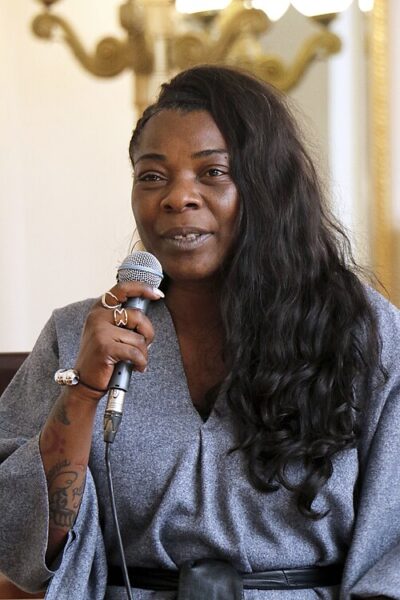
Concha Buika
Concha Buika is a Spanish singer of Equatorial Guinean descent. Born May 11, 1972, in Palma. Awards include Ramon Llull Award and Gold Medal of Merit in the Fine Arts.
Facts
21 facts · 1 confirmed by two sources · 8 cited · 12 from one source
Where this comes from
Papalocal keeps its own record. It started from these sources; what each one said is kept here as it was copied, so a change on their side never changes this page by itself. Tap one to read its version.
What Wikidata says · copied November 16, 2026 · revision 2536715921
- Described as
- Spanish singer of Equatorial Guinean descent
- Other names
- María Concepción Balboa Buika, Buika
- Born
- May 11, 1972 · 1 reference
- Born in
- Palma · 1 reference
- Name at birth
- María Concepción Balboa Buika
- Citizen of
- Spain; Equatorial Guinea
- Occupation
- singer · 1 reference; composer · 2 references; record producer · 1 reference; poet · 1 reference; musician · 2 references
- Genre
- flamenco jazz; jazz · 1 reference; pop music; Latin music
- Instrument
- voice · 1 reference
- Record label
- Warner Music Group
- Awards
- Ramon Llull Award; Gold Medal of Merit in the Fine Arts
- Father
- Juan Balboa Boneke
- Siblings
- Boré Buika; Guillem Balboa Buika
- Wikipedias with a page
- 31
Wikidata item Q266042 (wikidata.org/wiki/Q266042), public domain (CC0). Copied November 16, 2026.
What Wikipedia says · copied November 16, 2026 · revision 1366552669
María Concepción Balboa Buika (born 11 May 1972), known as Concha Buika or just Buika, is a Spanish singer. Her album Niña de Fuego was nominated for the 2008 Latin Grammy Award for Album of the Year and La Noche Más Larga was nominated for Best Latin Jazz Album at the 56th Annual Grammy Awards in 2014.
- Born, in its opening lines
- May 11, 1972
From the Wikipedia article “Concha Buika” (en.wikipedia.org/wiki/Concha_Buika), by its contributors, under CC BY-SA 4.0 (creativecommons.org/licenses/by-sa/4.0/). Copied November 16, 2026; not changed.
Confirmed Two sources agree. Cited One source, and it names where it got it. One source One source, without a reference of its own. Sources disagree The sources disagree. We show the best-supported value and keep theirs below.
