
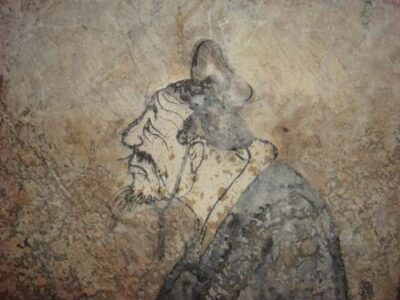
Confucius
Confucius was the 5th-century BCE Chinese philosopher and politician. Born 551 BC, in Qufu. Died 479 BC, in Si River. Known for Analects.
Facts
21 facts · 0 confirmed by two sources · 6 cited · 15 from one source
Where this comes from
Papalocal keeps its own record. It started from these sources; what each one said is kept here as it was copied, so a change on their side never changes this page by itself. Tap one to read its version.
What Wikidata says · copied November 16, 2026 · revision 2568185506
- Described as
- 5th-century BCE Chinese philosopher and politician
- Other names
- Konfuzius, Confucio, Kongzi, Kung Fu Tzu, Cheu-kong, Kung Fu-tse, Zhongni, Cong-tse, K'ung-tzu, K'ung Fu-tse, Chung-ni, K'ung Chung-ni
- Born
- 551 BC · 2 references
- Died
- 479 BC · 3 references
- Born in
- Qufu
- Died in
- Si River · 1 reference
- Buried in
- Cemetery of Confucius
- Name at birth
- 孔丘
- Citizen of
- Lu
- Occupation
- philosopher · 1 reference; teacher · 1 reference; writer · 2 references
- Known for
- Analects
- Field
- philosophy; social philosophy · 1 reference; ethics · 1 reference
- Spouse
- Qiguan Shi
- Children
- Kong Li · 1 reference; Kong Jiao
- Father
- Shuliang He
- Mother
- Yan Zhengzai
- Siblings
- Meng Pi
- Religion
- Confucianism
- Wikipedias with a page
- 315
Wikidata item Q4604 (wikidata.org/wiki/Q4604), public domain (CC0). Copied November 16, 2026.
What Wikipedia says · copied November 16, 2026 · revision 1383616909
Confucius (c. 551 – c. 479 BCE), born Kong Qiu, was a Chinese philosopher of the Spring and Autumn period who is traditionally considered the paragon of Chinese sages. Much of the shared cultural heritage of the Sinosphere originates in the philosophy and teachings of Confucius. His philosophical teachings, called Confucianism, emphasized personal and governmental morality, harmonious social relationships, righteousness, kindness, sincerity, and a ruler's responsibilities to lead by virtue.
Confucius considered himself a transmitter for the values of earlier periods which he claimed had been abandoned in his time. He advocated for filial piety, endorsing strong family loyalty, ancestor veneration, and the respect of elders by their children and of husbands by their wives. Confucius recommended a robust family unit as the cornerstone for an ideal government. He championed the Silver Rule, or a negative form of the Golden Rule, advising, "Do not do unto others what you do not want done to yourself."
The time of Confucius's life saw a rich diversity of thought, and was a formative period in China's intellectual history. His ideas gained in prominence during the Warring States period, but experienced setback immediately following the Qin conquest. Under Emperor Wu of Han, Confucius's ideas received official sanction, with affiliated works becoming mandatory readings for career paths leading to officialdom. During the Tang and Song dynasties, Confucianism developed into a system known in the West as Neo-Confucianism. In the 20th century, an intellectual movement emerged in the Republic of China that sought to apply Confucian ideology in a modern context, known as New Confucianism. From ancient dynasties to the modern era, Confucianism has integrated into the Chinese social fabric and way of life.
Traditionally, Confucius is credited with having authored or edited many of the ancient texts including all of the Five Classics. However, modern scholars exercise caution in attributing specific assertions to Confucius himself, for at least some of the texts and philosophy associated with him were of a more ancient origin. Aphorisms concerning his teachings were compiled in the Analects, but not until many years after his death.
From the Wikipedia article “Confucius” (en.wikipedia.org/wiki/Confucius), by its contributors, under CC BY-SA 4.0 (creativecommons.org/licenses/by-sa/4.0/). Copied November 16, 2026; not changed.
Confirmed Two sources agree. Cited One source, and it names where it got it. One source One source, without a reference of its own. Sources disagree The sources disagree. We show the best-supported value and keep theirs below.
