
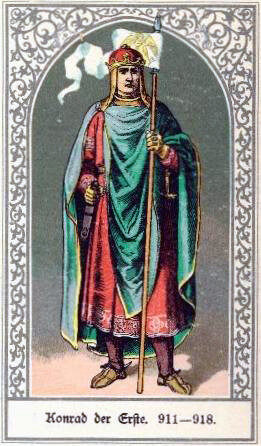
Conrad I of Germany
Conrad I of Germany was a king of East Francia. Born 881. Died December 23, 918, in Weilburg. Positions held include King of East Francia (911–918).
Facts
12 facts · 2 confirmed by two sources · 4 cited · 6 from one source
Where this comes from
Papalocal keeps its own record. It started from these sources; what each one said is kept here as it was copied, so a change on their side never changes this page by itself. Tap one to read its version.
What Wikidata says · copied November 16, 2026 · revision 2564005120
- Described as
- king of East Francia
- Other names
- Conrad I the Younger, Conrad I
- Born
- 881 · 2 references
- Died
- December 23, 918 · 1 reference
- Died in
- Weilburg
- Buried in
- Fulda Cathedral · 1 reference
- Citizen of
- Germany · 1 reference
- Positions held
- King of East Francia (911–918)
- Spouse
- Cunigunde of Swabia · 1 reference
- Children
- Hicha von Schwaben
- Father
- Conrad, Duke of Thuringia · 1 reference
- Mother
- Glismut · 1 reference
- Siblings
- Eberhard of Franconia
- Religion
- Christianity
- Wikipedias with a page
- 49
Wikidata item Q157121 (wikidata.org/wiki/Q157121), public domain (CC0). Copied November 16, 2026.
What Wikipedia says · copied November 16, 2026 · revision 1368522129
Conrad I (German: Konrad; c. 881 – 23 December 918), called the Younger, was the king of East Francia from 911 to 918. He was the first king not of the Carolingian dynasty, the first to be elected by the nobility and the first to be anointed. He was chosen as the king by the rulers of the East Frankish stem duchies after the death of young King Louis the Child. Ethnically Frankish, prior to this election he had ruled the Duchy of Franconia from 906.
- Born, in its opening lines
- c. 881
- Died, in its opening lines
- December 23, 918
From the Wikipedia article “Conrad I of Germany” (en.wikipedia.org/wiki/Conrad_I_of_Germany), by its contributors, under CC BY-SA 4.0 (creativecommons.org/licenses/by-sa/4.0/). Copied November 16, 2026; not changed.
Confirmed Two sources agree. Cited One source, and it names where it got it. One source One source, without a reference of its own. Sources disagree The sources disagree. We show the best-supported value and keep theirs below.
