
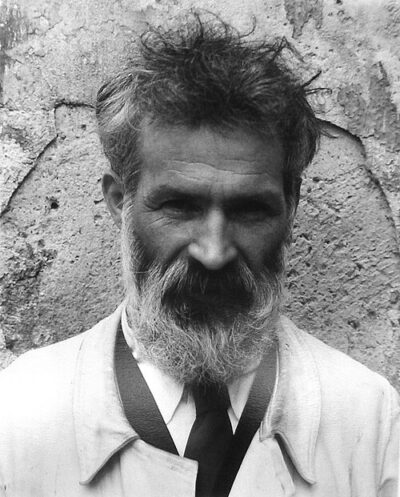
Constantin Brâncuși
Constantin Brâncuși was a Romanian sculptor, photographer and painter. Born February 19, 1876, in Hobița. Died March 16, 1957, in Paris. Known for Bird in Space, The Endless Column and The Kiss. Educated at Bucharest National University of Arts and Beaux-Arts de Paris.
Facts
24 facts · 2 confirmed by two sources · 9 cited · 13 from one source
Where this comes from
Papalocal keeps its own record. It started from these sources; what each one said is kept here as it was copied, so a change on their side never changes this page by itself. Tap one to read its version.
What Wikidata says · copied November 16, 2026 · revision 2563214839
- Described as
- Romanian sculptor, photographer and painter (1876-1960)
- Other names
- brancussi, Constantin Brîncuși, Brancusi, Branncussi, Constantin dynamita, Constantin Brâncuşi, Constantin Brâncusi, Constantin Brincusi
- Born
- February 19, 1876 · 7 references
- Died
- March 16, 1957 · 8 references
- Born in
- Hobița · 2 references
- Died in
- Paris · 4 references
- Buried in
- Montparnasse Cemetery
- Citizen of
- Romania; France · 1 reference
- Occupation
- sculptor · 2 references; photographer · 3 references; painter · 1 reference; illustrator · 1 reference; architectural drafter · 1 reference; assemblage artist · 1 reference
- Education
- Bucharest National University of Arts; Beaux-Arts de Paris
- Member of
- Romanian Academy
- Genre
- abstract art · 1 reference
- Known for
- Bird in Space; The Endless Column; The Kiss; Sleeping Muse; Măiastra
- Field
- art of sculpture
- Religion
- Eastern Orthodox Church · 1 reference
- Wikipedias with a page
- 65
Wikidata item Q153048 (wikidata.org/wiki/Q153048), public domain (CC0). Copied November 16, 2026.
What Wikipedia says · copied November 16, 2026 · revision 1383153235
Constantin Brâncuși (Romanian: [konstanˈtin brɨŋˈkuʃʲ] ; February 19, 1876 – March 16, 1957) was a Romanian sculptor, painter, and photographer. Considered one of the most influential sculptors of the 20th century and a pioneer of modernism, Brâncuși is called the patriarch of modern sculpture. As a child, he displayed an aptitude for carving wooden farm tools. Formal studies took him first to Bucharest, then to Munich, then to the École des Beaux-Arts in Paris from 1905 to 1907. His art emphasizes clean geometrical lines that balance forms inherent in his materials with the symbolic allusions of representational art. Brâncuși's practice drew from Romanian folk art, and sought a great deal of inspiration in non-European cultures as a source of primitive exoticism, as did Paul Gauguin, Pablo Picasso, André Derain, and others.
- Born, in its opening lines
- February 19, 1876
- Died, in its opening lines
- March 16, 1957
From the Wikipedia article “Constantin Brâncuși” (en.wikipedia.org/wiki/Constantin_Brâncuși), by its contributors, under CC BY-SA 4.0 (creativecommons.org/licenses/by-sa/4.0/). Copied November 16, 2026; not changed.
Confirmed Two sources agree. Cited One source, and it names where it got it. One source One source, without a reference of its own. Sources disagree The sources disagree. We show the best-supported value and keep theirs below.
