
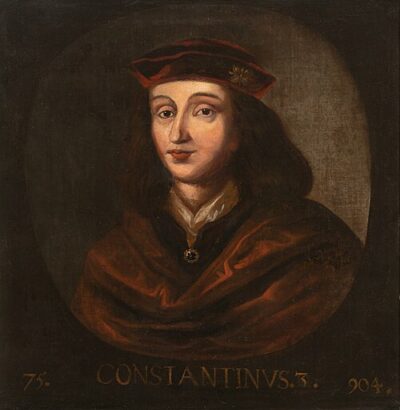
Constantine III of Scotland
Constantine III of Scotland was a King of Scotland. Born 971. Died 997, in Perth. Positions held include Monarch of Scotland (995–997).
Facts
8 facts · 1 confirmed by two sources · 2 cited · 4 from one source · 1 where the sources disagree
What’s different
- Born: we show 971 (Sources disagree). Wikipedia says 970
Where this comes from
Papalocal keeps its own record. It started from these sources; what each one said is kept here as it was copied, so a change on their side never changes this page by itself. Tap one to read its version.
What Wikidata says · copied November 16, 2026 · revision 2567832433
- Described as
- King of Scotland (971–997)
- Other names
- Constantine III, King of Alba
- Born
- 971 · 1 reference
- Died
- 997 · 1 reference
- Died in
- Perth
- Buried in
- Iona Abbey
- Citizen of
- Kingdom of Scotland
- Occupation
- politician · 1 reference
- Positions held
- Monarch of Scotland (995–997)
- Father
- Cuilén · 1 reference
- Wikipedias with a page
- 42
Wikidata item Q320078 (wikidata.org/wiki/Q320078), public domain (CC0). Copied November 16, 2026.
What Wikipedia says · copied November 16, 2026 · revision 1340408568
Constantine, son of Cuilén (Middle Gaelic: Causantín mac Cuiléin; Modern Gaelic: Còiseam mac Chailein), known in most modern regnal lists as Constantine III (c. 970 – 997), was king of Alba (Scotland) from 995 to 997. He was the son of King Cuilén. John of Fordun calls him, in Latin, Constantinus Calvus, which translates to Constantine the Bald. (Middle Gaelic: Causantín In Maol) Benjamin Hudson notes that insular authors from Ireland and Scotland typically identified rulers by sobriquets, noting for example the similarly named Eugenius Calvus (Owain Foel), an 11th century King of Strathclyde.
- Born, in its opening lines
- 970
- Died, in its opening lines
- 997
From the Wikipedia article “Constantine III of Scotland” (en.wikipedia.org/wiki/Constantine_III_of_Scotland), by its contributors, under CC BY-SA 4.0 (creativecommons.org/licenses/by-sa/4.0/). Copied November 16, 2026; not changed.
Confirmed Two sources agree. Cited One source, and it names where it got it. One source One source, without a reference of its own. Sources disagree The sources disagree. We show the best-supported value and keep theirs below.
