
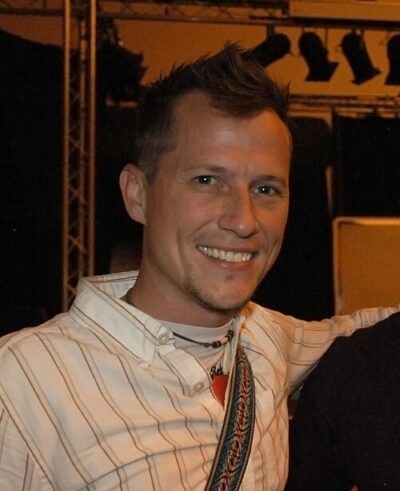
Corin Nemec
Corin Nemec is an American actor and producer. Born November 5, 1971, in Little Rock. Educated at American Repertory Company.
Facts
12 facts · 1 confirmed by two sources · 2 cited · 9 from one source
Where this comes from
Papalocal keeps its own record. It started from these sources; what each one said is kept here as it was copied, so a change on their side never changes this page by itself. Tap one to read its version.
What Wikidata says · copied November 15, 2026 · revision 2553825951
- Described as
- American actor and producer
- Other names
- Corin "Corky" Nemec, Corky Nemec, Joseph Charles Nemec IV
- Born
- November 5, 1971
- Born in
- Little Rock · 1 reference
- Name at birth
- Joseph Charles Nemec IV · 1 reference
- Citizen of
- United States
- Occupation
- actor; television actor; film actor; screenwriter · 1 reference; film producer · 1 reference
- Education
- American Repertory Company
- Father
- Joseph Nemec III
- Religion
- Scientology
- Wikipedias with a page
- 34
Wikidata item Q313712 (wikidata.org/wiki/Q313712), public domain (CC0). Copied November 15, 2026.
What Wikipedia says · copied November 15, 2026 · revision 1381175158
Joseph Charles Nemec IV (; born November 5, 1971), known professionally as Corin Nemec, is an American actor, producer, screenwriter and graffiti artist. He was billed as Corin "Corky" Nemec or Corky Nemec until 1990. His most prominent roles were the television movie playing Steven Stayner in I Know My First Name is Steven (1989), as the title character in the sitcom Parker Lewis Can't Lose (1990–1993), Jonas Quinn in the science fiction series Stargate SG-1, and Harold Lauder in Stephen King’s miniseries The Stand. He is known in India for his role as Allan in 2007 film Parzania.
- Born, in its opening lines
- November 5, 1971
From the Wikipedia article “Corin Nemec” (en.wikipedia.org/wiki/Corin_Nemec), by its contributors, under CC BY-SA 4.0 (creativecommons.org/licenses/by-sa/4.0/). Copied November 15, 2026; not changed.
Confirmed Two sources agree. Cited One source, and it names where it got it. One source One source, without a reference of its own. Sources disagree The sources disagree. We show the best-supported value and keep theirs below.
