
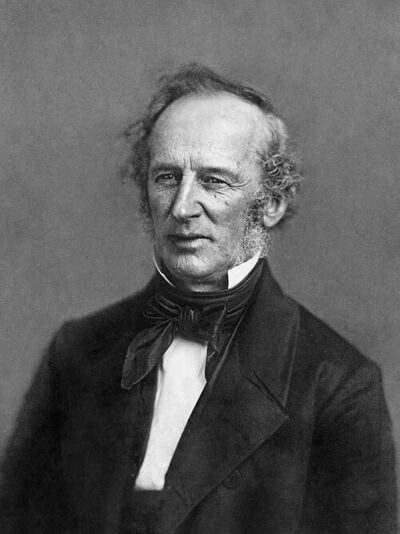
Cornelius Vanderbilt
Cornelius Vanderbilt was an American businessman and tycoon. Born May 27, 1794, in Staten Island. Died January 4, 1877, in Manhattan. Awards include Congressional Gold Medal and National Book Award for Nonfiction.
Facts
26 facts · 2 confirmed by two sources · 14 cited · 10 from one source
Where this comes from
Papalocal keeps its own record. It started from these sources; what each one said is kept here as it was copied, so a change on their side never changes this page by itself. Tap one to read its version.
What Wikidata says · copied November 13, 2026 · revision 2562977683
- Described as
- American businessman and tycoon (1794–1877)
- Other names
- Commodore Vanderbilt, Cornelius Vanderbilt I
- Born
- May 27, 1794 · 8 references
- Died
- January 4, 1877 · 8 references
- Born in
- Staten Island
- Died in
- Manhattan
- Buried in
- Moravian Cemetery · 1 reference
- Citizen of
- United States
- Occupation
- railway executive; entrepreneur · 1 reference
- Awards
- Congressional Gold Medal; National Book Award for Nonfiction (2009)
- Spouse
- Frank Armstrong Crawford Vanderbilt (1869–1877) · 1 reference; Sophia Johnson (1813–1868) · 1 reference
- Children
- Phoebe Jane Vanderbilt; Ethelinda Vanderbilt · 1 reference; Eliza Vanderbilt · 1 reference; William Henry Vanderbilt · 1 reference; Emily Almira Vanderbilt · 1 reference; Sophia Johnson Vanderbilt · 1 reference; Maria Louisa Vanderbilt · 1 reference; Frances Lavinia Vanderbilt · 1 reference; Cornelius Jeremiah Vanderbilt · 1 reference; Mary Alicia Vanderbilt · 1 reference; Catherine Juliette Vanderbilt · 1 reference; George Washington Vanderbilt · 1 reference
- Father
- Cornelius Vanderbilt · 1 reference
- Mother
- Phebe Hand · 1 reference
- Wikipedias with a page
- 54
Wikidata item Q313721 (wikidata.org/wiki/Q313721), public domain (CC0). Copied November 13, 2026.
What Wikipedia says · copied November 13, 2026 · revision 1370806565
Cornelius Vanderbilt (May 27, 1794 – January 4, 1877), nicknamed "the Commodore", was an American business magnate who built his wealth in railroads and shipping. After working with his father's business, he worked his way into leadership positions in inland and coastal shipping, then invested in the rapidly growing railroad industry, which transformed the geography of the United States.
As one of the richest Americans in history and wealthiest figures overall, Vanderbilt was the patriarch of the wealthy and influential Vanderbilt family. He provided the initial gift to found Vanderbilt University in Nashville, Tennessee. For his monopoly on shipping and the railroads, facilitated in part by political manipulation, Vanderbilt is often described as either a "captain of industry" or a "robber baron".
- Born, in its opening lines
- May 27, 1794
- Died, in its opening lines
- January 4, 1877
From the Wikipedia article “Cornelius Vanderbilt” (en.wikipedia.org/wiki/Cornelius_Vanderbilt), by its contributors, under CC BY-SA 4.0 (creativecommons.org/licenses/by-sa/4.0/). Copied November 13, 2026; not changed.
Confirmed Two sources agree. Cited One source, and it names where it got it. One source One source, without a reference of its own. Sources disagree The sources disagree. We show the best-supported value and keep theirs below.
