
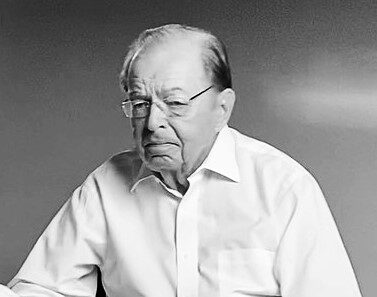
Creed Taylor
Creed Taylor was an American record producer. Born May 13, 1929, in Lynchburg. Died August 23, 2022, in Nuremberg. Educated at Duke University.
Facts
11 facts · 1 confirmed by two sources · 2 cited · 7 from one source · 1 where the sources disagree
What’s different
- Died: we show August 23, 2022 (Sources disagree). Wikipedia says August 22, 2022
Where this comes from
Papalocal keeps its own record. It started from these sources; what each one said is kept here as it was copied, so a change on their side never changes this page by itself. Tap one to read its version.
What Wikidata says · copied November 18, 2026 · revision 2545715308
- Described as
- American record producer (1929–2022)
- Born
- May 13, 1929 · 1 reference
- Died
- August 23, 2022 · 1 reference
- Born in
- Lynchburg · 1 reference
- Died in
- Nuremberg
- Citizen of
- United States
- Occupation
- record producer; composer; conductor · 1 reference
- Education
- Duke University · 1 reference
- Genre
- jazz
- Instrument
- trumpet
- Wikipedias with a page
- 17
Wikidata item Q1139476 (wikidata.org/wiki/Q1139476), public domain (CC0). Copied November 18, 2026.
What Wikipedia says · copied November 18, 2026 · revision 1376367336
Creed Bane Taylor V (May 13, 1929 – August 22, 2022) was an American record producer, best known for his work with Creed Taylor, Inc. which he founded in 1966 and the CTI Records label. His career also included periods at Bethlehem Records, ABC-Paramount Records (including its jazz label, Impulse!), Verve, and A&M Records. In the 1960s, he signed bossa nova artists from Brazil to record in the US including Antonio Carlos Jobim, Eumir Deodato, João Gilberto, Astrud Gilberto, and Airto Moreira.
- Born, in its opening lines
- May 13, 1929
- Died, in its opening lines
- August 22, 2022
From the Wikipedia article “Creed Taylor” (en.wikipedia.org/wiki/Creed_Taylor), by its contributors, under CC BY-SA 4.0 (creativecommons.org/licenses/by-sa/4.0/). Copied November 18, 2026; not changed.
Confirmed Two sources agree. Cited One source, and it names where it got it. One source One source, without a reference of its own. Sources disagree The sources disagree. We show the best-supported value and keep theirs below.
