
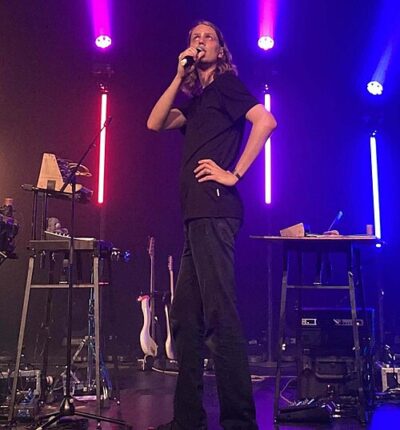
Daði Freyr Pétursson
Daði Freyr Pétursson is an Icelandic musician. Born June 30, 1992, in Reykjavík. Educated at Sudurland College.
Facts
15 facts · 1 confirmed by two sources · 5 cited · 9 from one source
Where this comes from
Papalocal keeps its own record. It started from these sources; what each one said is kept here as it was copied, so a change on their side never changes this page by itself. Tap one to read its version.
What Wikidata says · copied November 16, 2026 · revision 2558150925
- Described as
- Icelandic musician
- Other names
- Daði Freyr, Daði
- Born
- June 30, 1992 · 1 reference
- Born in
- Reykjavík · 1 reference
- Citizen of
- Iceland
- Occupation
- singer · 1 reference; songwriter; singer-songwriter; computer scientist · 1 reference; musician · 1 reference
- Education
- Sudurland College
- Member of
- Gagnamagnið
- Genre
- pop music · 1 reference
- Record label
- AWAL
- Lived in
- Berlin (2014–) · 1 reference
- Height
- 2.08 m (6 ft 10 in) · 1 reference
- Website
- https://dadifreyr.com/
- Wikipedias with a page
- 32
Wikidata item Q31749372 (wikidata.org/wiki/Q31749372), public domain (CC0). Copied November 16, 2026.
What Wikipedia says · copied November 16, 2026 · revision 1383365233
Daði Freyr Pétursson (Icelandic: [ˈtaːðɪ freiːr̥ ˈpʰjɛːtʏr̥sɔn]; born 30 June 1992), known professionally as Daði Freyr or simply Daði, is an Icelandic musician. As the frontman of Daði & Gagnamagnið (Icelandic: Daði og Gagnamagnið [ˈtaːðɪ ɔɣ ˈkaknaˌmaknɪθ]), he was due to represent Iceland in the Eurovision Song Contest 2020 with the song "Think About Things", before the event was cancelled in response to the COVID-19 pandemic. Instead, he represented Iceland in the Eurovision Song Contest 2021 with the song "10 Years", finishing in fourth place.
- Born, in its opening lines
- June 30, 1992
From the Wikipedia article “Daði Freyr” (en.wikipedia.org/wiki/Daði_Freyr), by its contributors, under CC BY-SA 4.0 (creativecommons.org/licenses/by-sa/4.0/). Copied November 16, 2026; not changed.
Confirmed Two sources agree. Cited One source, and it names where it got it. One source One source, without a reference of its own. Sources disagree The sources disagree. We show the best-supported value and keep theirs below.
