
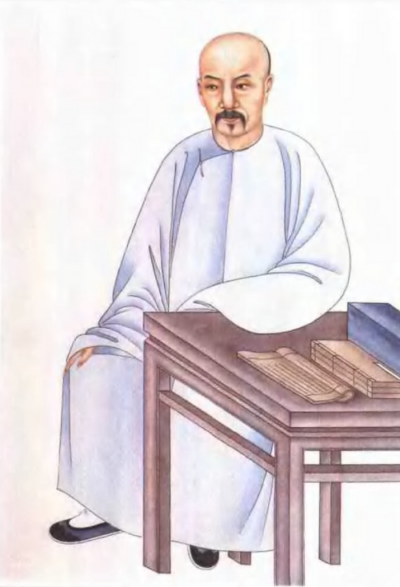
Dai Zhen
Dai Zhen was a Chinese scholar. Born January 19, 1724, in Xiuning County. Died July 1, 1777, in Beijing. Positions held include Shujishi of Qing dynasty.
Facts
12 facts · 2 confirmed by two sources · 3 cited · 7 from one source
Where this comes from
Papalocal keeps its own record. It started from these sources; what each one said is kept here as it was copied, so a change on their side never changes this page by itself. Tap one to read its version.
What Wikidata says · copied November 17, 2026 · revision 2556904114
- Described as
- Chinese scholar
- Other names
- Gaoxi, Shenxiu, Dongyuan
- Born
- January 19, 1724 · 2 references
- Died
- July 1, 1777 · 2 references
- Born in
- Xiuning County
- Died in
- Beijing
- Citizen of
- Qing dynasty · 1 reference; People's Republic of China · 1 reference
- Occupation
- philosopher; mathematician · 1 reference; polymath · 1 reference
- Positions held
- Shujishi of Qing dynasty
- Field
- philosophy
- Religion
- Confucianism
- Wikipedias with a page
- 24
Wikidata item Q714369 (wikidata.org/wiki/Q714369), public domain (CC0). Copied November 17, 2026.
What Wikipedia says · copied November 17, 2026 · revision 1385973860
Dai Zhen (Chinese: 戴震; pinyin: Dài Zhèn; Wade–Giles: Tai Chen, January 19, 1724 – July 1, 1777), courtesy name Shenxiu (慎修), art name Dongyuan (東原), was a Chinese philosopher of the Qing dynasty. Hailing from Xiuning, Anhui Dai was a versatile scholar who made great contributions to mathematics, geography, phonology and philosophy. His philosophical and philological critiques of Neo-Confucianism continue to be influential. In 1773, Dai was recruited by scholar Ji Yun to be one of the editors of the official encyclopedia and collection of books, Siku Quanshu.
Dai's philosophical contributions included those to the Han Learning school of Evidential Learning (Evidentialism) which criticized the Song Learning school of Neo-Confucianism. In particular, two criticisms that Dai made were: First, Neo-Confucianism focused too much on introspective self-examination whereas truth was to be found in investigation of the external world.
Second, he criticized the Neo-Confucian drive to eliminate human desire as an obstacle to rational investigation. Dai argued that human desire was a good and integral part of the human experience, and that eliminating human desire from philosophy had the bad effect of making it difficult to understand and control one's emotions as well as making it impossible to establish empathy with others.
- Born, in its opening lines
- January 19, 1724
- Died, in its opening lines
- July 1, 1777
From the Wikipedia article “Dai Zhen” (en.wikipedia.org/wiki/Dai_Zhen), by its contributors, under CC BY-SA 4.0 (creativecommons.org/licenses/by-sa/4.0/). Copied November 17, 2026; not changed.
Confirmed Two sources agree. Cited One source, and it names where it got it. One source One source, without a reference of its own. Sources disagree The sources disagree. We show the best-supported value and keep theirs below.
