
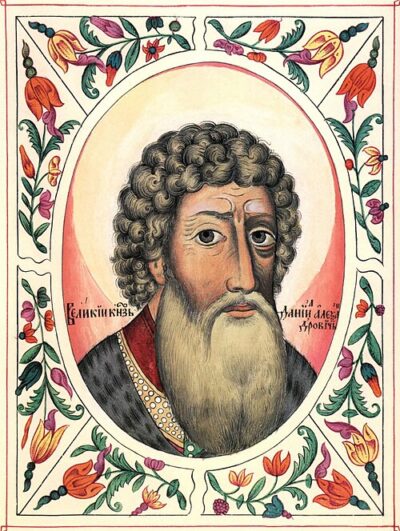
Daniel of Moscow
Daniel of Moscow was a Russian prince and saint. Born 1261, in Vladimir. Died March 5, 1303, in Moscow. Positions held include Prince of Moscow (1263–1303).
Facts
19 facts · 2 confirmed by two sources · 1 cited · 16 from one source
Where this comes from
Papalocal keeps its own record. It started from these sources; what each one said is kept here as it was copied, so a change on their side never changes this page by itself. Tap one to read its version.
What Wikidata says · copied November 16, 2026 · revision 2565422379
- Described as
- Russian prince and saint (1261-1303)
- Born
- 1261 · 4 references
- Died
- March 5, 1303
- Born in
- Vladimir
- Died in
- Moscow
- Citizen of
- Grand Principality of Vladimir; Duchy of Moscow
- Occupation
- politician
- Positions held
- Prince of Moscow (1263–1303)
- Spouse
- Agrippina
- Children
- Yury of Moscow; Ivan I of Moscow · 1 reference; Afanasy Danilovich; Boris Danilovich
- Father
- Alexander Nevsky
- Mother
- Alexandra Brachyslavna · 1 reference
- Siblings
- Dmitry of Pereslavl; Vassili Aleksandrovitch; Andrey of Gorodets
- Religion
- Eastern Orthodoxy
- Wikipedias with a page
- 45
Wikidata item Q295186 (wikidata.org/wiki/Q295186), public domain (CC0). Copied November 16, 2026.
What Wikipedia says · copied November 16, 2026 · revision 1358938299
Daniil Aleksandrovich (Russian: Даниил Александрович; 1261 – 5 March 1303), also known as Daniil of Moscow, was the youngest son of Alexander Nevsky and forefather of all Princes of Moscow. His descendants are known as the Daniilovichi. He has been locally approved for veneration in the Russian Orthodox Church, with feast days on 17 March and 12 September.
- Born, in its opening lines
- 1261
- Died, in its opening lines
- March 5, 1303
From the Wikipedia article “Daniel of Moscow” (en.wikipedia.org/wiki/Daniel_of_Moscow), by its contributors, under CC BY-SA 4.0 (creativecommons.org/licenses/by-sa/4.0/). Copied November 16, 2026; not changed.
Confirmed Two sources agree. Cited One source, and it names where it got it. One source One source, without a reference of its own. Sources disagree The sources disagree. We show the best-supported value and keep theirs below.
