
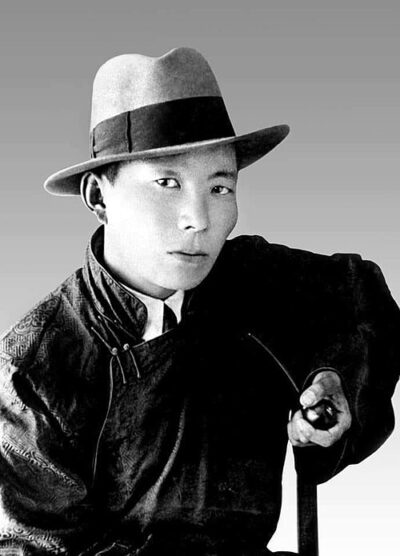
Dashdorjiin Natsagdorj
Dashdorjiin Natsagdorj was a Mongolian writer and poet. Born November 17, 1906, in Töv Province. Died July 13, 1937, in Ulaanbaatar.
Facts
8 facts · 2 confirmed by two sources · 1 cited · 5 from one source
What’s different
- Died: we show July 13, 1937 (Confirmed). Wikidata also lists June 13, 1937
Where this comes from
Papalocal keeps its own record. It started from these sources; what each one said is kept here as it was copied, so a change on their side never changes this page by itself. Tap one to read its version.
What Wikidata says · copied November 18, 2026 · revision 2570726145
- Described as
- Mongolian writer and poet (1906–1937)
- Other names
- Borjgin Dashdorjiin Natsagdorj
- Born
- November 17, 1906 · 1 reference
- Died
- June 13, 1937; July 13, 1937 · 2 references
- Born in
- Töv Province
- Died in
- Ulaanbaatar
- Citizen of
- Mongolia
- Occupation
- poet; writer · 1 reference; translator
- Wikipedias with a page
- 21
Wikidata item Q1171809 (wikidata.org/wiki/Q1171809), public domain (CC0). Copied November 18, 2026.
What Wikipedia says · copied November 18, 2026 · revision 1369785745
Dashdorjiin Natsagdorj (Mongolian: Дашдоржийн Нацагдорж; 17 November 1906 – 13 July 1937), was a Mongolian writer, poet, playwright, and journalist. He is considered the founder and most-widely read author of modern Mongolian literature, and an exponent of "socialist realism". His most famous works are the opera Three Fateful Hills (1934), about the 1921 revolution, and the poem "My Homeland" (1933), about Mongolia's natural beauty, in addition to short stories. Natsagdorj also held several government positions in Mongolia in the 1920s.
- Born, in its opening lines
- November 17, 1906
- Died, in its opening lines
- July 13, 1937
From the Wikipedia article “Dashdorjiin Natsagdorj” (en.wikipedia.org/wiki/Dashdorjiin_Natsagdorj), by its contributors, under CC BY-SA 4.0 (creativecommons.org/licenses/by-sa/4.0/). Copied November 18, 2026; not changed.
Confirmed Two sources agree. Cited One source, and it names where it got it. One source One source, without a reference of its own. Sources disagree The sources disagree. We show the best-supported value and keep theirs below.
