
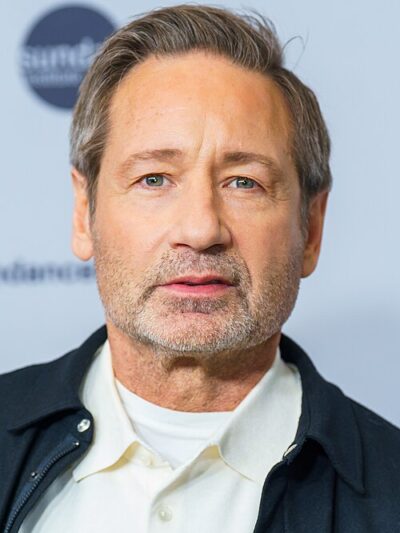
David Duchovny
David Duchovny is an American actor and writer. Born August 7, 1960, in New York City. Known for The X-Files and Californication. Educated at Princeton University and Yale University. Awards include Golden Globe Award for Best Actor – Television Series Drama, Satellite Award for Best Actor – Television Series Drama and Golden Globe Award for Best Actor – Television Series Musical or Comedy.
Facts
31 facts · 1 confirmed by two sources · 8 cited · 22 from one source
Where this comes from
Papalocal keeps its own record. It started from these sources; what each one said is kept here as it was copied, so a change on their side never changes this page by itself. Tap one to read its version.
What Wikidata says · copied November 13, 2026 · revision 2567404217
- Described as
- American actor and writer
- Other names
- David William Duchovny
- Born
- August 7, 1960 · 5 references
- Born in
- New York City · 1 reference
- Name at birth
- David William Duchovny · 1 reference
- Citizen of
- United States
- Occupation
- actor · 2 references; writer · 1 reference; screenwriter · 1 reference; singer-songwriter; film producer · 1 reference; television producer · 1 reference; film director · 1 reference; television actor
- Education
- Princeton University (–1982); Yale University; Grace Church School; Collegiate School · 1 reference
- Member of
- Phi Beta Kappa Society
- Genre
- alternative rock
- Known for
- The X-Files; Californication
- Awards
- Golden Globe Award for Best Actor – Television Series Drama (1997); Satellite Award for Best Actor – Television Series Drama (1997); Golden Globe Award for Best Actor – Television Series Musical or Comedy (2008); star on Hollywood Walk of Fame · 1 reference; CineMerit Award (2026) · 1 reference
- Spouse
- Téa Leoni (1997–2014) · 1 reference
- Children
- West Duchovny · 1 reference; Kyd Miller Duchovny
- Father
- Amram Ducovny
- Lived in
- Los Angeles
- Website
- https://davidduchovny.com
- Wikipedias with a page
- 78
Wikidata item Q484365 (wikidata.org/wiki/Q484365), public domain (CC0). Copied November 13, 2026.
What Wikipedia says · copied November 13, 2026 · revision 1382215193
David William Duchovny ( duu-KOV-nee; born (1960-08-07)August 7, 1960) is an American actor, writer, director and musician. He received his breakthrough with the role of Fox Mulder in The X-Files franchise (1993–2002, 2016–2018) receiving international fame and earning a Golden Globe Award as well as nominations for two Primetime Emmy Awards and five Actor Awards.
He received another Golden Globe for his portrayal of Hank Moody on the television series Californication (2007–2014). He also had a recurring role in the Twin Peaks franchise (1990–1991, 2017) as transgender DEA agent Denise Bryson. He executive-produced and starred in the historically based cop drama Aquarius (2015–2016).
He wrote, directed and starred in the 2004 coming-of-age comedy House of D, which also starred Robin Williams, Téa Leoni and Anton Yelchin.
His film work includes a starring role alongside Brad Pitt in Kalifornia (1993) and minor roles in the coming-of-age black comedy Don't Tell Mom the Babysitter's Dead (1991), and the family comedy Beethoven (1992). In 1992, he also played Roland Totheroh in the biographical comedy-drama Chaplin with Robert Downey Jr. In the 2000s, he starred in Return to Me with Minnie Driver (2000), Evolution with Orlando Jones (2001), Connie and Carla with Nia Vardalos (2004), and The Joneses with Demi Moore (2009).
Duchovny holds a B.A. in English literature from Princeton University, and an M.A. in English literature from Yale University, and has published five books: Holy Cow: A Modern-Day Dairy Tale (2015), Bucky F*cking Dent (2016), Miss Subways (2018), Truly Like Lightning (2021), and The Reservoir (2022).
- Born, in its opening lines
- August 7, 1960
From the Wikipedia article “David Duchovny” (en.wikipedia.org/wiki/David_Duchovny), by its contributors, under CC BY-SA 4.0 (creativecommons.org/licenses/by-sa/4.0/). Copied November 13, 2026; not changed.
Confirmed Two sources agree. Cited One source, and it names where it got it. One source One source, without a reference of its own. Sources disagree The sources disagree. We show the best-supported value and keep theirs below.
