
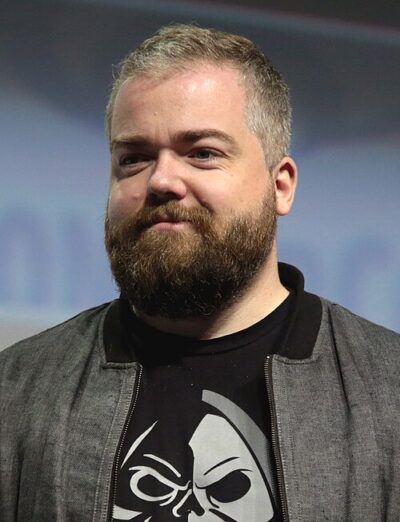
David F. Sandberg is a Swedish filmmaker. Born January 21, 1981, in Jönköping.
Facts
16 facts · 1 confirmed by two sources · 4 cited · 11 from one source
Where this comes from
Papalocal keeps its own record. It started from these sources; what each one said is kept here as it was copied, so a change on their side never changes this page by itself. Tap one to read its version.
What Wikidata says · copied November 17, 2026 · revision 2546515761
- Described as
- Swedish filmmaker (born 1981)
- Other names
- David Sandberg, ponysmasher, David F Sandberg, dauid
- Born
- January 21, 1981 · 1 reference
- Born in
- Jönköping
- Citizen of
- Sweden
- Occupation
- composer; screenwriter · 1 reference; actor; film director; animator · 1 reference; director · 2 references
- Field
- film direction · 1 reference; film screenwriting · 1 reference
- Spouse
- Lotta Losten (2013–)
- Lived in
- Jönköping (1981–2009); Gothenburg (2009–2015); Los Angeles (2015–)
- Website
- http://dauid.com/
- Wikipedias with a page
- 27
Wikidata item Q16775487 (wikidata.org/wiki/Q16775487), public domain (CC0). Copied November 17, 2026.
What Wikipedia says · copied November 17, 2026 · revision 1380522852
David Fredrik Sandberg (born 21 January 1981) is a Swedish filmmaker and YouTuber. He came to prominence for writing, directing, producing, editing, and scoring no-budget short horror films, which he released online under the pseudonym "ponysmasher". The most popular of these, Lights Out (2013), received a feature film adaptation in 2016, marking his feature-length directorial debut. He has since directed the films Annabelle: Creation (2017), Shazam! (2019), Shazam! Fury of the Gods (2023), and the 2025 film adaptation of the video game Until Dawn.
- Born, in its opening lines
- January 21, 1981
From the Wikipedia article “David F. Sandberg” (en.wikipedia.org/wiki/David_F._Sandberg), by its contributors, under CC BY-SA 4.0 (creativecommons.org/licenses/by-sa/4.0/). Copied November 17, 2026; not changed.
Confirmed Two sources agree. Cited One source, and it names where it got it. One source One source, without a reference of its own. Sources disagree The sources disagree. We show the best-supported value and keep theirs below.
