
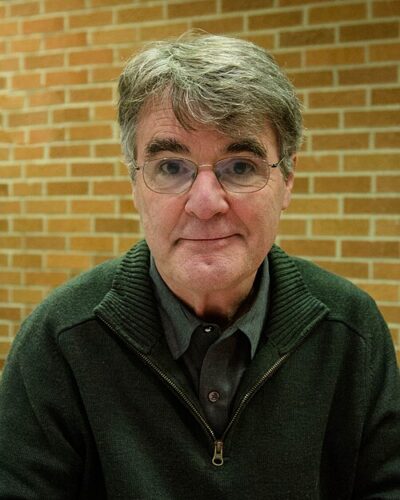
David Macaulay
David Macaulay is a British-born American illustrator and writer. Born December 2, 1946, in Burton upon Trent. Known for The Way Things Work, Black and White and Cathedral. Educated at Rhode Island School of Design and Cumberland High School. Awards include National Humanities Medal, Caldecott Honor (2 times) and Caldecott Medal.
Facts
31 facts · 1 confirmed by two sources · 9 cited · 20 from one source · 1 where the sources disagree
What’s different
- Born: we show December 2, 1946 (Confirmed). Wikidata also lists December 2, 1942
- Born in: we show Burton upon Trent (Sources disagree). Wikidata also lists Lancashire
Where this comes from
Papalocal keeps its own record. It started from these sources; what each one said is kept here as it was copied, so a change on their side never changes this page by itself. Tap one to read its version.
What Wikidata says · copied November 19, 2026 · revision 2569069114
- Described as
- British-born American illustrator and writer
- Other names
- David Alexander Macaulay
- Born
- December 2, 1946 · 7 references; December 2, 1942 · 1 reference
- Born in
- Lancashire; Burton upon Trent · 1 reference
- Citizen of
- United States · 1 reference
- Occupation
- architect · 2 references; illustrator · 2 references; university teacher; children's writer · 1 reference; graphic designer · 1 reference; draftsperson · 1 reference; non-fiction writer · 1 reference; art historian · 1 reference
- Worked for
- Rhode Island School of Design
- Education
- Rhode Island School of Design; Cumberland High School · 1 reference
- Known for
- The Way Things Work; Black and White; Cathedral · 1 reference; Castle · 1 reference
- Awards
- National Humanities Medal; Caldecott Honor (2 times) (1974, 1978); Caldecott Medal (1991); MacArthur Fellows Program (2006); Zilveren Griffel (1975); Silver Brush (1990); Charles Frankel Prize (1995) · 1 reference; Science Writing Award
- Field
- young adult literature · 1 reference
- Lived in
- Rhode Island; Norwich
- Website
- https://davidmacaulay.com; http://www.davidmacaulay.com
- Wikipedias with a page
- 14
Wikidata item Q1134356 (wikidata.org/wiki/Q1134356), public domain (CC0). Copied November 19, 2026.
What Wikipedia says · copied November 19, 2026 · revision 1372699535
David Macaulay (born 2 December 1946) is a British-born American illustrator and writer. His works include Cathedral (1973), The Way Things Work (1988), and its updated revisions The New Way Things Work (1998) and The Way Things Work Now (2016). His illustrations have been featured in nonfiction books combining text and illustrations explaining architecture, design, and engineering, and he has written a number of children's fiction books.
In 2006, Macaulay was a recipient of a MacArthur Fellows Program award and received the Caldecott Medal in 1991 for his book Black and White, published in 1990.
- Born, in its opening lines
- December 2, 1946
From the Wikipedia article “David Macaulay” (en.wikipedia.org/wiki/David_Macaulay), by its contributors, under CC BY-SA 4.0 (creativecommons.org/licenses/by-sa/4.0/). Copied November 19, 2026; not changed.
Confirmed Two sources agree. Cited One source, and it names where it got it. One source One source, without a reference of its own. Sources disagree The sources disagree. We show the best-supported value and keep theirs below.
