
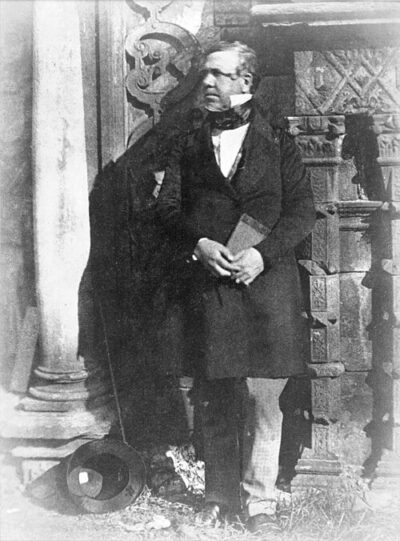
David Roberts
David Roberts was a Scottish painter. Born October 24, 1796, in Stockbridge. Died November 25, 1864, in London. Known for The Remains of the Roman Forum.
Facts
10 facts · 2 confirmed by two sources · 2 cited · 6 from one source
Where this comes from
Papalocal keeps its own record. It started from these sources; what each one said is kept here as it was copied, so a change on their side never changes this page by itself. Tap one to read its version.
What Wikidata says · copied November 16, 2026 · revision 2564800508
- Described as
- Scottish painter (1796–1864)
- Other names
- D. Roberts
- Born
- October 24, 1796 · 10 references
- Died
- November 25, 1864 · 11 references
- Born in
- Stockbridge
- Died in
- London · 1 reference
- Buried in
- West Norwood Cemetery
- Citizen of
- United Kingdom of Great Britain and Ireland
- Occupation
- painter · 1 reference
- Member of
- Royal Academy of Arts
- Known for
- The Remains of the Roman Forum
- Field
- painting
- Wikipedias with a page
- 28
Wikidata item Q369776 (wikidata.org/wiki/Q369776), public domain (CC0). Copied November 16, 2026.
What Wikipedia says · copied November 16, 2026 · revision 1381247772
David Roberts (24 October 1796 – 25 November 1864) was a Scottish painter. He is especially known for The Holy Land, Syria, Idumea, Arabia, Egypt, and Nubia, a prolific series of detailed lithograph prints of Egypt and the Near East that he produced from sketches he made during long tours of the region (1838–1840). These and his large oil paintings of similar subjects made him a prominent Orientalist painter. He was elected as a Royal Academician in 1841.
- Born, in its opening lines
- October 24, 1796
- Died, in its opening lines
- November 25, 1864
From the Wikipedia article “David Roberts (painter)” (en.wikipedia.org/wiki/David_Roberts_(painter)), by its contributors, under CC BY-SA 4.0 (creativecommons.org/licenses/by-sa/4.0/). Copied November 16, 2026; not changed.
Confirmed Two sources agree. Cited One source, and it names where it got it. One source One source, without a reference of its own. Sources disagree The sources disagree. We show the best-supported value and keep theirs below.
