
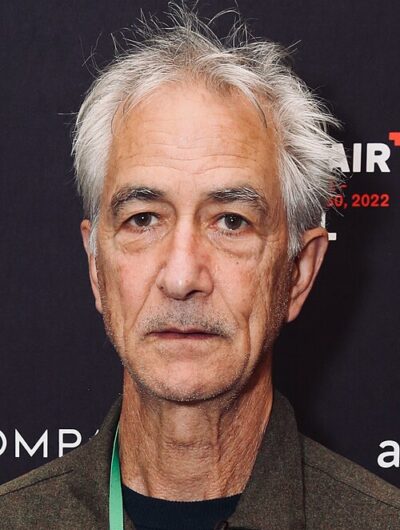
David Strathairn
David Strathairn is an American actor. Born January 26, 1949, in San Francisco. Educated at Williams College and Redwood High School. Awards include Independent Spirit Award for Best Supporting Male, Satellite Award for Best Supporting Actor – Series, Miniseries or Television Film and Primetime Emmy Award for Outstanding Supporting Actor in a Miniseries or a Movie.
Facts
19 facts · 1 confirmed by two sources · 3 cited · 15 from one source
Where this comes from
Papalocal keeps its own record. It started from these sources; what each one said is kept here as it was copied, so a change on their side never changes this page by itself. Tap one to read its version.
What Wikidata says · copied November 13, 2026 · revision 2546546573
- Described as
- American actor (born 1949)
- Other names
- David Russell Strathairn
- Born
- January 26, 1949 · 3 references
- Born in
- San Francisco · 1 reference
- Name at birth
- David Russell Strathairn · 1 reference
- Citizen of
- United States
- Occupation
- film actor · 1 reference; television actor; stage actor; film producer · 1 reference; actor · 1 reference
- Education
- Williams College; Redwood High School · 1 reference; Ringling Bros. and Barnum & Bailey Clown College
- Awards
- Independent Spirit Award for Best Supporting Male (1992); Satellite Award for Best Supporting Actor – Series, Miniseries or Television Film (2010); Primetime Emmy Award for Outstanding Supporting Actor in a Miniseries or a Movie (2010); Volpi Cup for Best Actor
- Children
- Tay Strathairn
- Lived in
- Poughkeepsie
- Website
- http://www.david-strathairn.com
- Wikipedias with a page
- 41
Wikidata item Q310318 (wikidata.org/wiki/Q310318), public domain (CC0). Copied November 13, 2026.
What Wikipedia says · copied November 13, 2026 · revision 1382133732
David Russell Strathairn (; born January 26, 1949) is an American actor. Known for his leading roles on stage and screen, he has often portrayed historical figures including Edward R. Murrow, J. Robert Oppenheimer, William H. Seward, and John Dos Passos. He has received accolades including an Independent Spirit Award, a Primetime Emmy Award, and a Volpi Cup, and has been nominated for an Academy Award, a BAFTA Award, two Golden Globe Awards, and four Screen Actors Guild Awards.
Strathairn made his acting debut in his fellow Williams College graduate John Sayles' film Return of the Secaucus 7 (1980), and continued acting in films by Sayles, including Matewan (1987), Eight Men Out (1988), City of Hope (1991), Passion Fish (1992) and Limbo (1999). In the 1990s, he appeared in box-office successes including A League of Their Own (1992), Sneakers (1992), The Firm (1993), The River Wild (1995) and L.A. Confidential (1997) before gaining prominence for his portrayal of journalist Edward R. Murrow in George Clooney's Good Night, and Good Luck (2005), for which he was nominated for an Academy Award for Best Actor. He is recognized for his role as CIA Deputy Director Noah Vosen in The Bourne Ultimatum (2007) and The Bourne Legacy (2012). He appeared in Steven Spielberg's Lincoln (2012), Chloe Zhao's Nomadland (2020), and Guillermo del Toro's Nightmare Alley (2021) and lent his voice to the Disney animated film Zootopia 2 (2025).
Also known for his work on television, he made his debut in the soap opera Search for Tomorrow in 1984. He portrayed Robert Wegler in the HBO drama series The Sopranos (2004). He received a Primetime Emmy Award win and a Golden Globe Award nomination for his performance in the HBO television film Temple Grandin (2010). He portrayed John Dos Passos in the HBO film Hemingway & Gellhorn (2012). He has had recurring roles in the Syfy series Alphas (2011–2012), the NBC series The Blacklist (2015–2016), the Showtime series Billions (2017–2019), and the SyFy, then Amazon Prime Video, series The Expanse (2018–2019).
- Born, in its opening lines
- January 26, 1949
From the Wikipedia article “David Strathairn” (en.wikipedia.org/wiki/David_Strathairn), by its contributors, under CC BY-SA 4.0 (creativecommons.org/licenses/by-sa/4.0/). Copied November 13, 2026; not changed.
Confirmed Two sources agree. Cited One source, and it names where it got it. One source One source, without a reference of its own. Sources disagree The sources disagree. We show the best-supported value and keep theirs below.
